924
Lectures Watched
Since January 1, 2014
Since January 1, 2014
- A History of the World since 1300 (68)
- History of Rock, 1970-Present (50)
- A Brief History of Humankind (48)
- Chinese Thought: Ancient Wisdom Meets Modern Science (35)
- The Modern World: Global History since 1760 (35)
- The Bible's Prehistory, Purpose, and Political Future (28)
- Introduction aux éthiques philosophiques (27)
- Jesus in Scripture and Tradition (25)
- Roman Architecture (25)
- Sexing the Canvas: Art and Gender (23)
- Descubriendo la pintura europea de 1400 a 1800 (22)
- Introduction aux droits de l'homme (19)
- Buddhism and Modern Psychology (18)
- Calvin: Histoire et réception d'une Réforme (17)
- The Ancient Greeks (16)
- À la découverte du théâtre classique français (15)
- The French Revolution (15)
- Letters of the Apostle Paul (14)
- Key Constitutional Concepts and Supreme Court Cases (14)
- Christianisme et philosophie dans l'Antiquité (14)
- Egiptología (12)
- Western Music History through Performance (10)
- The Rise of Superheroes and Their Impact On Pop Culture (9)
- The Great War and Modern Philosophy (9)
- Alexander the Great (9)
- Greek and Roman Mythology (9)
- Human Evolution: Past and Future (9)
- Phenomenology and the Conscious Mind (9)
- Masterpieces of World Literature (8)
- Villes africaines: la planification urbaine (8)
- Greeks at War: Homer at Troy (7)
- Pensamiento Científico (7)
- MongoDB for Node.js Developers (7)
- Fundamentos de la escritura en español (7)
- Introduction to Psychology (7)
- Programming Mobile Applications for Android (7)
- The Rooseveltian Century (6)
- Karl der Große - Pater Europae (6)
- Fake News, Facts, and Alternative Facts (6)
- Reason and Persuasion Through Plato's Dialogues (6)
- The Emergence of the Modern Middle East (6)
- A Beginner's Guide to Irrational Behavior (6)
- Lingua e cultura italiana: avanzata (6)
- L'avenir de la décision : connaître et agir en complexité (5)
- Understanding Einstein: The Special Theory of Relativity (5)
- Dinosaur Paleobiology (5)
- Exploring Beethoven's Piano Sonatas (5)
- War for the Greater Middle East (4)
- Emergence of Life (4)
- Introduction to Public Speaking (4)
- The Kennedy Half Century (4)
- Problèmes métaphysiques à l'épreuve de la politique, 1943-1968 (4)
- Designing Cities (4)
- Western Civilization: Ancient and Medieval Europe (3)
- Paleontology: Early Vertebrate Evolution (3)
- Orientierung Geschichte (3)
- Moons of Our Solar System (3)
- Introduction à la philosophie de Friedrich Nietzsche (3)
- Devenir entrepreneur du changement (3)
- La Commedia di Dante (3)
- History of Rock and Roll, Part One (3)
- Formation of the Universe, Solar System, Earth and Life (3)
- Initiation à la programmation en Java (3)
- La visione del mondo della Relatività e della Meccanica Quantistica (3)
- The Music of the Beatles (3)
- Analyzing the Universe (3)
- Découvrir l'anthropologie (3)
- Postwar Abstract Painting (3)
- The Science of Religion (2)
- La Philanthropie : Comprendre et Agir (2)
- Highlights of Modern Astronomy (2)
- Materials Science: 10 Things Every Engineer Should Know (2)
- The Changing Landscape of Ancient Rome (2)
- Lingua e letteratura in italiano (2)
- Gestion des aires protégées en Afrique (2)
- Géopolitique de l'Europe (2)
- Introduction à la programmation en C++ (2)
- Découvrir la science politique (2)
- Our Earth: Its Climate, History, and Processes (2)
- The European Discovery of China (2)
- Understanding Russians: Contexts of Intercultural Communication (2)
- Philosophy and the Sciences (2)
- Søren Kierkegaard: Subjectivity, Irony and the Crisis of Modernity (2)
- The Fall and Rise of Jerusalem (2)
- The Science of Gastronomy (2)
- Galaxies and Cosmology (2)
- Introduction to Classical Music (2)
- Art History for Artists, Animators and Gamers (2)
- L'art des structures 1 : Câbles et arcs (2)
- Russian History: from Lenin to Putin (2)
- The World of Wine (1)
- Wine Tasting: Sensory Techniques for Wine Analysis (1)
- William Wordsworth: Poetry, People and Place (1)
- The Talmud: A Methodological Introduction (1)
- Switzerland in Europe (1)
- The World of the String Quartet (1)
- Igor Stravinsky’s The Rite of Spring (1)
- El Mediterráneo del Renacimiento a la Ilustración (1)
- Science of Exercise (1)
- Социокультурные аспекты социальной робототехники (1)
- Russian History: from Lenin to Putin (1)
- The Rise of China (1)
- The Renaissance and Baroque City (1)
- Visualizing Postwar Tokyo (1)
- In the Night Sky: Orion (1)
- Oriental Beliefs: Between Reason and Traditions (1)
- The Biology of Music (1)
- Mountains 101 (1)
- Moral Foundations of Politics (1)
- Mobilité et urbanisme (1)
- Introduction to Mathematical Thinking (1)
- Making Sense of News (1)
- Magic in the Middle Ages (1)
- Introduction to Italian Opera (1)
- Intellectual Humility (1)
- The Computing Technology Inside Your Smartphone (1)
- Human Origins (1)
- Miracles of Human Language (1)
- From Goddard to Apollo: The History of Rockets (1)
- Hans Christian Andersen’s Fairy Tales (1)
- Handel’s Messiah and Baroque Oratorio (1)
- Theater and Globalization (1)
- Gestion et Politique de l'eau (1)
- Une introduction à la géographicité (1)
- Frontières en tous genres (1)
- Créer et développer une startup technologique (1)
- Découvrir le marketing (1)
- Escribir para Convencer (1)
- Anthropology of Current World Issues (1)
- Poetry in America: Whitman (1)
- Introducción a la genética y la evolución (1)
- Shakespeare: On the Page and in Performance (1)
- The Civil War and Reconstruction (1)
- Dinosaur Ecosystems (1)
- Développement durable (1)
- Vital Signs: Understanding What the Body Is Telling Us (1)
- Imagining Other Earths (1)
- Learning How to Learn (1)
- Miracles of Human Language: An Introduction to Linguistics (1)
- Web Intelligence and Big Data (1)
- Andy Warhol (1)
- Understanding the Brain: The Neurobiology of Everyday Life (1)
- Practicing Tolerance in a Religious Society (1)
- Subsistence Marketplaces (1)
- Physique générale - mécanique (1)
- Exercise Physiology: Understanding the Athlete Within (1)
- Introduction to Mathematical Philosophy (1)
- What Managers Can Learn from Great Philosophers (1)
- A la recherche du Grand Paris (1)
- The New Nordic Diet (1)
- A New History for a New China, 1700-2000 (1)
- The Magna Carta and its Legacy (1)
- The Age of Jefferson (1)
- History and Future of Higher Education (1)
- Éléments de Géomatique (1)
- 21st Century American Foreign Policy (1)
- The Law of the European Union (1)
- Design: Creation of Artifacts in Society (1)
- Introduction to Data Science (1)
- Configuring the World (1)
- From the Big Bang to Dark Energy (1)
- Animal Behaviour (1)
- Programming Mobile Services for Android Handheld Systems (1)
- The American South: Its Stories, Music, and Art (1)
- Care of Elders with Alzheimer's Disease (1)
- Contagious: How Things Catch On (1)
- Constitutional Law - The Structure of Government (1)
- Narratives of Nonviolence in the American Civil Rights Movement (1)
- Christianity: From Persecuted Faith to Global Religion (200-1650) (1)
- Age of Cathedrals (1)
- Controversies of British Imperialism (1)
- Big History: From the Big Bang until Today (1)
- Bemerkenswerte Menschen (1)
- The Art of Poetry (1)
- Superpowers of the Ancient World: the Near East (1)
- America Through Foreign Eyes (1)
- Advertising and Society (1)
Hundreds of free, self-paced university courses available:
my recommendations here
my recommendations here
Peruse my collection of 275
influential people of the past.
influential people of the past.
View My Class Notes via:


Receive My Class Notes via E-Mail:
Contact Me via E-Mail:
edward [at] tanguay.info
Notes on video lecture:
Transition in India: Last of the Mughals
Notes taken by Edward Tanguay on September 10, 2015 (go to class or lectures)

Choose from these words to fill the blanks below:
transportation, discontent, impinging, Enfield, 1857, corporate, dismantling, businessmen, cotton, Dehli, merchant, Portuguese, jute, coastal, monopoly, 1840s, domestic, Punjab, competition, coal, defected, languish, dualistic, Dalhousie, princes, taxes, Bombay, Balkanization, commercial, Indian, railroad, market, Calcutta, mercantile, decomposition, treaty, modernized, consumer, industrial
•
mid-19th century India
•
a story that braids together the stories of
•
the
•
the rifle
•
the political shifts that are being imposed on the subcontinent
•
the protracted crisis in India is in contrast to what is happening in the United States
•
two major exporters faced with two very different political fortunes
•
the pressures mounting for free market forces unleashed by the dismantling of old, states
•
the Americas
•
a series of European conquests
•
the Spanish, the and the English
•
colonized, dismantled, and drove underground many of the incumbent systems
•
India
•
1833 East India Company still enjoyed exclusive privileges in India
•
but increasing forced to compete with other merchants
•
a stimulus for the arrival of new looking for opportunities in India
•
both foreign (British)
•
as well as merchants taking advantages of opportunities presented by the dismantling of the monopoly power that the East India Company enjoyed
•
one of the most important limitations of the penetration of the Indian market was the obstacles in
•
most mercantile activity was restricted to areas
•
thus the railroads had an important effect on India
•
began to take place in
•
a spur to the expansion of the cotton frontier
•
cotton business focused on
•
India had the which could fuel the locomotive which would transport the cotton
•
most of the businesses in mining and in cotton production was, in fact, owned
•
but cotton was not the only export, due to penetration of the continent
•
also and tea
•
began to change the forces of power in India
•
away from
•
to the magnates in the coastal port cities
•
the interiors get integrated to the coasts, and the coasts get integrated into the global forces
•
this is part of the revolution
•
part of the advent of the revolution
•
these economic shifts coincide with a political process
•
Mughal Empire was in secular
•
had been composed of a constellation of forces that paid tribute
•
one by one they
•
by the middle of the 19th century, the Mughals were not just overwhelmed
•
not just by the power of the East India Company was able to impose on the region
•
but East India Company was facing arrival of new
•
result
•
of India
•
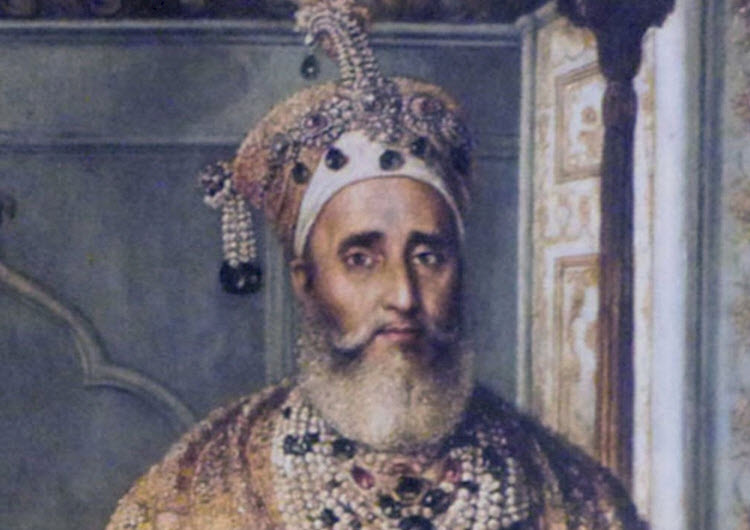
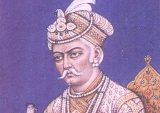
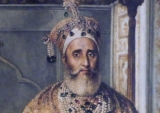
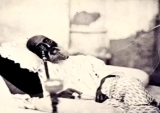
Bahadur Shah Zafar
•
last Mughal Emperor emperor in name only
•
authority was limited only to the city of Delhi
•
following his involvement in the Indian Rebellion of , the British exiled him to Rangoon in British-controlled Burma
•
Indian actors played an active role in decomposing an incumbent system such as the Mughal Empire
•
also reduced the power that the East India Company once enjoyed
•
it's not a case of the East India Company replacing the Mughal emperor
•
not a takeover, but much more complicated
•
Zamindar
•
a figure who would collect to make tributary payments to authorities, either to
•
emperor
•
East India Company
•
like tax farmers
•
would return privileges
•
aligned themselves with local and merchants
•
influential in the power of the Mughal Empire and East India Company
•
The Earl of
•
1848 onwards
•
tried to
•
reorganize India
•
annex territories to their base in Bengal, in
•
an immediate affront to the Mughal Empire
•
expand railroads into inner India
•
a society
•
some parts of India locked in an old, peasant world
•
some parts were much more
•
higher productivity
•
market production
•
incorporated into the global, industrial arrangements
•
areas like the were booming
•
while the interiors of Bengal were beginning to
•
all of this a setting for a perfect storm for frictions and
•
economic growth is not necessarily positive for everybody
•
there are losers involved politically, economically, and socially
•
as nations are forming in Europe and the Americas
•
and new empires are being constituted in Asia,
•
ports were affecting China
•
these contradictory pressures were on India
Vocabulary:
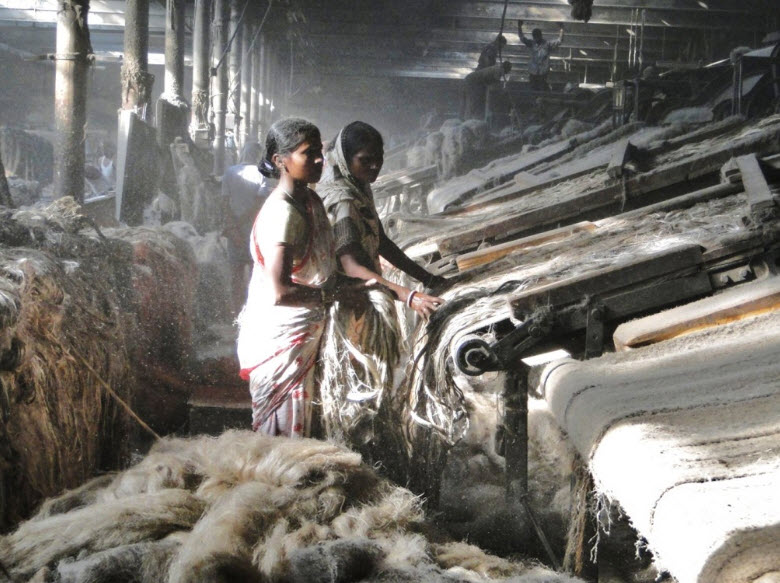 jute, n. a long, soft, shiny vegetable fiber that can be spun into coarse, strong threads, grown in East India and used for making mats, paper, gunny cloth ⇒ "Even though many mining and cotton businesses in India were, in fact, Indian owned, cotton was not the only major export: the production and export of jute and tea from Bengal were also becoming larger markets, in part due to the penetration of of railroads into the Indian continent beginning in the 1840s, and these were dominated by British businessmen." jute, n. a long, soft, shiny vegetable fiber that can be spun into coarse, strong threads, grown in East India and used for making mats, paper, gunny cloth ⇒ "Even though many mining and cotton businesses in India were, in fact, Indian owned, cotton was not the only major export: the production and export of jute and tea from Bengal were also becoming larger markets, in part due to the penetration of of railroads into the Indian continent beginning in the 1840s, and these were dominated by British businessmen." |
Spelling Corrections:
incumbant ⇒ incumbent
Ideas and Concepts:
On the difference between Delhi and New Delhi, via this morning's History Since 1300 class: "Most people think that New Delhi is Delhi but it is not. New Delhi, which is the capital and seat of the government of India, is a territory in Delhi. It was in the early 20th century that New Delhi city was designed. It was designed as part of the shifting of the capital of the British Empire from Calcutta to Delhi. Sir Edwin Lutyens and Sir Herbert Baker are the architects who are credited with the design of the city. Both Delhi and New Delhi lie on the banks of the Yamuna River, but New Delhi was designed to be in the south of Delhi. Delhi is now a state and has a governor as the head of the government. The Government of India and the Delhi government jointly administer New Delhi. It is very hard to draw a boundary between Delhi and New Delhi. But one can make out the difference when looking at the architecture. In New Delhi, there is the Rashtrapathi Bhavan, Secretariat building, Parliament, Connaught Place, Lodhi Gardens, Jantar Mantar and India Gate. The embassies of other countries are situated towards the South of New Delhi. The streets and lanes in New Delhi are beautiful and tidy when compared with those of Delhi. In Delhi, one can come across old monuments, Mughal architecture and tombs. Red Fort, Lotus temple, Juma Masjid, Humayun Tomb are some of the old monuments in Delhi."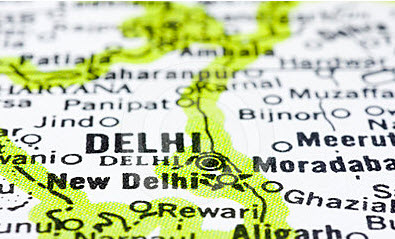
 |  |  |
 |  |  |
 |  |  |
 |  |  |
 |  |  |
 |  |  |
 |  |  |
 |  |  |
 |  |  |
 |  |  |
 |  |  |
 |  |  |
 |  |  |
 |  |  |
 |  |  |
 |  |  |
 |  |  |
 |  |  |
 |  |  |
 |  |  |
 |  |  |
 |  |  |
 |  |