EDWARD'S LECTURE NOTES:
More notes at http://tanguay.info/learntracker
C O U R S E
A History of the World since 1300
Jeremy Adelman, Princeton University
 |
C O U R S E L E C T U R E Transition in India: Last of the Mughals Notes taken on September 10, 2015 by Edward Tanguay |
•
mid-19th century India
•
a story that braids together the stories of
•
the railroad
•
the Enfield rifle
•
the political shifts that are being imposed on the subcontinent
•
the protracted crisis in India is in contrast to what is happening in the United States
•
two major cotton exporters faced with two very different political fortunes
•
the pressures mounting for free market forces unleashed by the dismantling of old, mercantile states
•
the Americas
•
a series of European conquests
•
the Spanish, the Portuguese and the English
•
colonized, dismantled, and drove underground many of the incumbent systems
•
India
•
1833 East India Company still enjoyed exclusive monopoly privileges in India
•
but increasing forced to compete with other merchants
•
a stimulus for the arrival of new businessmen looking for opportunities in India
•
both foreign (British)
•
as well as domestic merchants taking advantages of opportunities presented by the dismantling of the monopoly power that the East India Company enjoyed
•
one of the most important limitations of the penetration of the Indian market was the obstacles in transportation
•
most mercantile activity was restricted to coastal areas
•
thus the railroads had an important effect on India
•
began to take place in 1840s
•
a spur to the expansion of the cotton frontier
•
cotton business focused on Bombay
•
India had the coal which could fuel the locomotive which would transport the cotton
•
most of the businesses in mining and in cotton production was, in fact, Indian owned
•
but cotton was not the only export, due to penetration of the continent
•
also jute and tea
•
began to change the forces of power in India
•
away from Dehli
•
to the merchant magnates in the coastal port cities
•
the interiors get integrated to the coasts, and the coasts get integrated into the global market forces
•
this is part of the industrial revolution
•
part of the advent of the consumer revolution
•
these economic shifts coincide with a political process
•
Mughal Empire was in secular decomposition
•
had been composed of a constellation of forces that paid tribute
•
one by one they defected
•
by the middle of the 19th century, the Mughals were not just overwhelmed
•
not just by the power of the East India Company was able to impose on the region
•
but East India Company was facing arrival of new competition
•
result
•
Balkanization of India
•
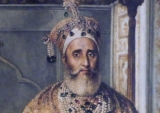
Bahadur Shah Zafar
•
last Mughal Emperor emperor in name only
•
authority was limited only to the city of Delhi
•
following his involvement in the Indian Rebellion of 1857, the British exiled him to Rangoon in British-controlled Burma
•
Indian actors played an active role in decomposing an incumbent system such as the Mughal Empire
•
also reduced the power that the East India Company once enjoyed
•
it's not a case of the East India Company replacing the Mughal emperor
•
not a corporate takeover, but much more complicated
•
Zamindar
•
a figure who would collect taxes to make tributary payments to authorities, either to
•
emperor
•
East India Company
•
like tax farmers
•
would return commercial privileges
•
aligned themselves with local princes and merchants
•
influential in dismantling the power of the Mughal Empire and East India Company
•
The Earl of Dalhousie
•
1848 onwards
•
tried to
•
reorganize India
•
annex territories to their base in Bengal, in Calcutta
•
an immediate affront to the Mughal Empire
•
expand railroads into inner India
•
a dualistic society
•
some parts of India locked in an old, peasant world
•
some parts were much more modernized
•
higher productivity
•
market production
•
incorporated into the global, industrial arrangements
•
areas like the Punjab were booming
•
while the interiors of Bengal were beginning to languish
•
all of this a setting for a perfect storm for frictions and discontent
•
economic growth is not necessarily positive for everybody
•
there are losers involved politically, economically, and socially
•
as nations are forming in Europe and the Americas
•
and new empires are being constituted in Asia,
•
treaty ports were affecting China
•
these contradictory pressures were impinging on India