924
Lectures Watched
Since January 1, 2014
Since January 1, 2014
- A History of the World since 1300 (68)
- History of Rock, 1970-Present (50)
- A Brief History of Humankind (48)
- Chinese Thought: Ancient Wisdom Meets Modern Science (35)
- The Modern World: Global History since 1760 (35)
- The Bible's Prehistory, Purpose, and Political Future (28)
- Introduction aux éthiques philosophiques (27)
- Jesus in Scripture and Tradition (25)
- Roman Architecture (25)
- Sexing the Canvas: Art and Gender (23)
- Descubriendo la pintura europea de 1400 a 1800 (22)
- Introduction aux droits de l'homme (19)
- Buddhism and Modern Psychology (18)
- Calvin: Histoire et réception d'une Réforme (17)
- The Ancient Greeks (16)
- À la découverte du théâtre classique français (15)
- The French Revolution (15)
- Letters of the Apostle Paul (14)
- Key Constitutional Concepts and Supreme Court Cases (14)
- Christianisme et philosophie dans l'Antiquité (14)
- Egiptología (12)
- Western Music History through Performance (10)
- The Rise of Superheroes and Their Impact On Pop Culture (9)
- The Great War and Modern Philosophy (9)
- Alexander the Great (9)
- Greek and Roman Mythology (9)
- Human Evolution: Past and Future (9)
- Phenomenology and the Conscious Mind (9)
- Masterpieces of World Literature (8)
- Villes africaines: la planification urbaine (8)
- Greeks at War: Homer at Troy (7)
- Pensamiento Científico (7)
- MongoDB for Node.js Developers (7)
- Fundamentos de la escritura en español (7)
- Introduction to Psychology (7)
- Programming Mobile Applications for Android (7)
- The Rooseveltian Century (6)
- Karl der Große - Pater Europae (6)
- Fake News, Facts, and Alternative Facts (6)
- Reason and Persuasion Through Plato's Dialogues (6)
- The Emergence of the Modern Middle East (6)
- A Beginner's Guide to Irrational Behavior (6)
- Lingua e cultura italiana: avanzata (6)
- L'avenir de la décision : connaître et agir en complexité (5)
- Understanding Einstein: The Special Theory of Relativity (5)
- Dinosaur Paleobiology (5)
- Exploring Beethoven's Piano Sonatas (5)
- War for the Greater Middle East (4)
- Emergence of Life (4)
- Introduction to Public Speaking (4)
- The Kennedy Half Century (4)
- Problèmes métaphysiques à l'épreuve de la politique, 1943-1968 (4)
- Designing Cities (4)
- Western Civilization: Ancient and Medieval Europe (3)
- Paleontology: Early Vertebrate Evolution (3)
- Orientierung Geschichte (3)
- Moons of Our Solar System (3)
- Introduction à la philosophie de Friedrich Nietzsche (3)
- Devenir entrepreneur du changement (3)
- La Commedia di Dante (3)
- History of Rock and Roll, Part One (3)
- Formation of the Universe, Solar System, Earth and Life (3)
- Initiation à la programmation en Java (3)
- La visione del mondo della Relatività e della Meccanica Quantistica (3)
- The Music of the Beatles (3)
- Analyzing the Universe (3)
- Découvrir l'anthropologie (3)
- Postwar Abstract Painting (3)
- The Science of Religion (2)
- La Philanthropie : Comprendre et Agir (2)
- Highlights of Modern Astronomy (2)
- Materials Science: 10 Things Every Engineer Should Know (2)
- The Changing Landscape of Ancient Rome (2)
- Lingua e letteratura in italiano (2)
- Gestion des aires protégées en Afrique (2)
- Géopolitique de l'Europe (2)
- Introduction à la programmation en C++ (2)
- Découvrir la science politique (2)
- Our Earth: Its Climate, History, and Processes (2)
- The European Discovery of China (2)
- Understanding Russians: Contexts of Intercultural Communication (2)
- Philosophy and the Sciences (2)
- Søren Kierkegaard: Subjectivity, Irony and the Crisis of Modernity (2)
- The Fall and Rise of Jerusalem (2)
- The Science of Gastronomy (2)
- Galaxies and Cosmology (2)
- Introduction to Classical Music (2)
- Art History for Artists, Animators and Gamers (2)
- L'art des structures 1 : Câbles et arcs (2)
- Russian History: from Lenin to Putin (2)
- The World of Wine (1)
- Wine Tasting: Sensory Techniques for Wine Analysis (1)
- William Wordsworth: Poetry, People and Place (1)
- The Talmud: A Methodological Introduction (1)
- Switzerland in Europe (1)
- The World of the String Quartet (1)
- Igor Stravinsky’s The Rite of Spring (1)
- El Mediterráneo del Renacimiento a la Ilustración (1)
- Science of Exercise (1)
- Социокультурные аспекты социальной робототехники (1)
- Russian History: from Lenin to Putin (1)
- The Rise of China (1)
- The Renaissance and Baroque City (1)
- Visualizing Postwar Tokyo (1)
- In the Night Sky: Orion (1)
- Oriental Beliefs: Between Reason and Traditions (1)
- The Biology of Music (1)
- Mountains 101 (1)
- Moral Foundations of Politics (1)
- Mobilité et urbanisme (1)
- Introduction to Mathematical Thinking (1)
- Making Sense of News (1)
- Magic in the Middle Ages (1)
- Introduction to Italian Opera (1)
- Intellectual Humility (1)
- The Computing Technology Inside Your Smartphone (1)
- Human Origins (1)
- Miracles of Human Language (1)
- From Goddard to Apollo: The History of Rockets (1)
- Hans Christian Andersen’s Fairy Tales (1)
- Handel’s Messiah and Baroque Oratorio (1)
- Theater and Globalization (1)
- Gestion et Politique de l'eau (1)
- Une introduction à la géographicité (1)
- Frontières en tous genres (1)
- Créer et développer une startup technologique (1)
- Découvrir le marketing (1)
- Escribir para Convencer (1)
- Anthropology of Current World Issues (1)
- Poetry in America: Whitman (1)
- Introducción a la genética y la evolución (1)
- Shakespeare: On the Page and in Performance (1)
- The Civil War and Reconstruction (1)
- Dinosaur Ecosystems (1)
- Développement durable (1)
- Vital Signs: Understanding What the Body Is Telling Us (1)
- Imagining Other Earths (1)
- Learning How to Learn (1)
- Miracles of Human Language: An Introduction to Linguistics (1)
- Web Intelligence and Big Data (1)
- Andy Warhol (1)
- Understanding the Brain: The Neurobiology of Everyday Life (1)
- Practicing Tolerance in a Religious Society (1)
- Subsistence Marketplaces (1)
- Physique générale - mécanique (1)
- Exercise Physiology: Understanding the Athlete Within (1)
- Introduction to Mathematical Philosophy (1)
- What Managers Can Learn from Great Philosophers (1)
- A la recherche du Grand Paris (1)
- The New Nordic Diet (1)
- A New History for a New China, 1700-2000 (1)
- The Magna Carta and its Legacy (1)
- The Age of Jefferson (1)
- History and Future of Higher Education (1)
- Éléments de Géomatique (1)
- 21st Century American Foreign Policy (1)
- The Law of the European Union (1)
- Design: Creation of Artifacts in Society (1)
- Introduction to Data Science (1)
- Configuring the World (1)
- From the Big Bang to Dark Energy (1)
- Animal Behaviour (1)
- Programming Mobile Services for Android Handheld Systems (1)
- The American South: Its Stories, Music, and Art (1)
- Care of Elders with Alzheimer's Disease (1)
- Contagious: How Things Catch On (1)
- Constitutional Law - The Structure of Government (1)
- Narratives of Nonviolence in the American Civil Rights Movement (1)
- Christianity: From Persecuted Faith to Global Religion (200-1650) (1)
- Age of Cathedrals (1)
- Controversies of British Imperialism (1)
- Big History: From the Big Bang until Today (1)
- Bemerkenswerte Menschen (1)
- The Art of Poetry (1)
- Superpowers of the Ancient World: the Near East (1)
- America Through Foreign Eyes (1)
- Advertising and Society (1)
Hundreds of free, self-paced university courses available:
my recommendations here
my recommendations here
Peruse my collection of 275
influential people of the past.
influential people of the past.
View My Class Notes via:


Receive My Class Notes via E-Mail:
Contact Me via E-Mail:
edward [at] tanguay.info
Notes on video lecture:
Mind Modularity, Cravings, and Self Control
Notes taken by Edward Tanguay on January 10, 2017 (go to class or lectures)


Choose from these words to fill the blanks below:
self, succumb, decision, attention, chemical, short, Chief, clenching, long, partake, rage, two, hatred, brain, temptation, lay, curious, quieter, sexual, reputation, RAIN, drinks, distant, cheat, attention, reason, turns, pronouns, frames, restlessness, retaliation, organism, modular, feelings, aware, investigate, consciously, fruit, gratification, winner
•
push back against the view of the mind
•
sometimes these of mind set in
•
I'm not really of them happening
•
they are sometimes triggered by
•
I could see a movie that could affect my subsequent behavior
•
but there are sometimes when I, the Executive Self, make a decision
•
I may be tempted to eat a powdered doughnut, but I say no, it's not in my -term interest to do it
•
rebuttal to this view
•
from a standpoint its fine to talk like this
•
e.g. if you are talking to your family at the dinner table, it's fine
•
eventually psychology as a scientific enterprise is going to have to move on from sentences that have like that
•
those sentences, to be more accurate of what happens in the world, are going to be more along the lines of
•
there are certain systems in your that are designed to be motivated to eat high calorie foods
•
there are other systems in your brain which have motives associated with long-term health
•
so the latter modules inhibited the behavior that was being facilitated by the -term modules
•
in that description there's no were "I" in there
•
there are no pronouns pointing to non-scientifically identifiable entities in the world, but rather nouns that are more likely to correspond to brain states that can actually be detected
•
conscious making
•
examples
•
which car should I buy
•
which college should I go to
•
which job offers should I accept
•
control
•
how many should I have at a party
•
should I smoke this cigarette
•
should I on my spouse
•
can this thing that feels like the reasonable me make decisions
•
is there some sense that can enter the equation
•
creating reasons
•
extramarital affair
•
one module that wants short-term gratification
•
one module is concerned about your
•
one module is worried about
•
the overall reason one has to have needs to be more complex than e.g. the reason that the sex-seeking module gives
•
so we come up with other reasons
•
if you knew how emotionally my spouse was you would understand
•
we rehearse these reasons
•
the conscious mind is doing this since it is this part of the mind that communicates with other people
•
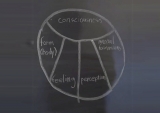
like a company with CEOs that are different
•
the PR director does not declare one a but wants to hear the reasons so that they are prepared to share these reasons pub
•
one CEO might be giving a reason that won't work in public
•
use of reason
•
the brain pays when it is not in one's long-term interest to do something
•
if you realize that reasons are not going to be accepted, then the conscious mind will cut this out
•
with addictions, reason tends to play less and less a role
•
e.g. becoming an alcoholic, you eventually stop producing reasons why you are drinking, you just drink
•
modules gain more power with victory
•
be careful to succumbing to that first time since it gets harder to resist
•
it could have been that they just take
•
but that's not the way it works
•
the way for natural selection selected them
•
the modules are stacked from basic to more complex
•
one rule is that modules that achieve in gaining
•
if the short-term sex module suggest you have quick sex with someone, and another module warns against it, and you in the sex, and it is pleasure and no consequences come of it, then is is success and will be encourages in the future
•
this can be explained in evolutionary terms such that when you see trees in the distance and a mind module that is responsible for identifying food suggest that the trees do have , and they do, then this module will be given preference in the future
•
addiction
•
the reward system was not so easy during our evolution
•
craving
•
the default mode network gets during meditation
•
mindfulness meditation to overcome smoking
•
get them to view the craving differently
•
acronym
•
Recognize what craving feels like
•
Allow it to be there
•
we often push away unpleasant things but you have to allow it to be in your body in order to it
•
Investigate
•
get , ask what does the craving feel like in my body right now
•
when you are really curious about something, it flips the valence from unpleasant to pleasant
•
use of a noting process: take note of tension, , burning, and other feelings in the body as the craving comes and goes away
•
the RAIN approach enables those dealing with cravings to ride the wave of craving instead of getting sucked into it
•
we often think that when a craving comes, we have to either to it or push it away
•
RAIN allows you to observe, or ride the wave
•
it's important to be with the craving, notice its physical sensations in their body, the mental , and if they don't act on it, they don't fuel it
•
mindfulness as operant conditioning
•
when you feel
•
when you pound your desk and yell at someone
•
if nothing bad happens, is that defined as success in natural selection terms
•
if you feel
•
you go around saying unfavorable things about them
•
it feels good
•
especially if they hate them too, or if they are persuaded
•
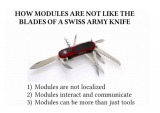
modules can be thought of metaphorically as which operate on conditional thinking
•
each vy for your
Vocabulary:
| valence, n. negative or positive psychological value assigned to something based on its attractiveness ⇒ "When you are curious about something, it flips the valence from unpleasant to pleasant." |
Ideas and Concepts:
On the self as less-than-accurate superstition, via tonight's Buddhism and Modern Psychology class:
"We often experience a natural push back against the modern modular view of the mind. Although we acknowledge that sometimes frames of mind set in which our conscious selves were not so aware of what was happening and so we were led to behavior which was later difficult to explain, and which was triggered by deep feelings and emotions seemingly beyond our control. For example, we could see a movie or have some intense experience, which could, for a time afterward, affect our subsequent behavior much beyond our control, etc.
But then there are definitely times when my self, my Chief Executive self, seems to take over and make a conscious decision. For example, I may be tempted to eat a piece of chocolate, but then I think about it and say to myself:no, it's not in my long-term interest to eat this chocolate.
From a lay standpoint, its fine to talk like this, e.g. if you are talking to your family at the dinner table, it's fine.
But eventually, psychology as a scientific enterprise is going to have to move on from sentences that have these non-referential pronouns in them. These sentences, to be more accurate of what happens in the world, are going to have to be changed more along the lines of:there are certain systems in my brain that are designed to be motivated to eat high calorie foods. There are other systems in my brain which have motives associated with long-term health. The latter modules inhibited the behavior that was being facilitated by the short-term modules, which prevented my organism from eating the chocolate.
In this description, there was no word "I" in there. There were no pronouns pointing to non-scientific entities. Rather, there were nouns that are more likely to correspond to brain states that can actually be detected by our most modern technology."
"We often experience a natural push back against the modern modular view of the mind. Although we acknowledge that sometimes frames of mind set in which our conscious selves were not so aware of what was happening and so we were led to behavior which was later difficult to explain, and which was triggered by deep feelings and emotions seemingly beyond our control. For example, we could see a movie or have some intense experience, which could, for a time afterward, affect our subsequent behavior much beyond our control, etc.
But then there are definitely times when my self, my Chief Executive self, seems to take over and make a conscious decision. For example, I may be tempted to eat a piece of chocolate, but then I think about it and say to myself:no, it's not in my long-term interest to eat this chocolate.
From a lay standpoint, its fine to talk like this, e.g. if you are talking to your family at the dinner table, it's fine.
But eventually, psychology as a scientific enterprise is going to have to move on from sentences that have these non-referential pronouns in them. These sentences, to be more accurate of what happens in the world, are going to have to be changed more along the lines of:there are certain systems in my brain that are designed to be motivated to eat high calorie foods. There are other systems in my brain which have motives associated with long-term health. The latter modules inhibited the behavior that was being facilitated by the short-term modules, which prevented my organism from eating the chocolate.
In this description, there was no word "I" in there. There were no pronouns pointing to non-scientific entities. Rather, there were nouns that are more likely to correspond to brain states that can actually be detected by our most modern technology."
Mindful meditation on cravings, via tonight's Buddhism and Modern Psychology class:
"One approach to get people to view cravings differently is with the RAIN acronym. First, you (R)ecognize what craving feels like, and (A)llow the craving to be there. We often try to push away unpleasant sensations that we have, but you have to allow these feelings to be in your body in order to (I)nvestigate them as a craving, get curious about it, ask yourself what the craving feels like in your body right now. When you are curious about something, it flips the valence from unpleasant to pleasant, so that you can (N)ote what is going on in your body:take note of tension, clenching, burning, and any other feelings in the body as the craving comes and goes away.
We often think that when a craving comes, we have to either succumb to it or push it away, but the RAIN approach gives you another option:simply observe it, ride the wave of craving instead of getting sucked into it. And when you are busy observing a craving, you don't act on it, and hence, don't fuel it."
"One approach to get people to view cravings differently is with the RAIN acronym. First, you (R)ecognize what craving feels like, and (A)llow the craving to be there. We often try to push away unpleasant sensations that we have, but you have to allow these feelings to be in your body in order to (I)nvestigate them as a craving, get curious about it, ask yourself what the craving feels like in your body right now. When you are curious about something, it flips the valence from unpleasant to pleasant, so that you can (N)ote what is going on in your body:take note of tension, clenching, burning, and any other feelings in the body as the craving comes and goes away.
We often think that when a craving comes, we have to either succumb to it or push it away, but the RAIN approach gives you another option:simply observe it, ride the wave of craving instead of getting sucked into it. And when you are busy observing a craving, you don't act on it, and hence, don't fuel it."
 |  |  |
 |  |  |
 |  |  |
 |  |  |
 |  |  |
 |  |  |