924
Lectures Watched
Since January 1, 2014
Since January 1, 2014
- A History of the World since 1300 (68)
- History of Rock, 1970-Present (50)
- A Brief History of Humankind (48)
- Chinese Thought: Ancient Wisdom Meets Modern Science (35)
- The Modern World: Global History since 1760 (35)
- The Bible's Prehistory, Purpose, and Political Future (28)
- Introduction aux éthiques philosophiques (27)
- Jesus in Scripture and Tradition (25)
- Roman Architecture (25)
- Sexing the Canvas: Art and Gender (23)
- Descubriendo la pintura europea de 1400 a 1800 (22)
- Introduction aux droits de l'homme (19)
- Buddhism and Modern Psychology (18)
- Calvin: Histoire et réception d'une Réforme (17)
- The Ancient Greeks (16)
- À la découverte du théâtre classique français (15)
- The French Revolution (15)
- Letters of the Apostle Paul (14)
- Key Constitutional Concepts and Supreme Court Cases (14)
- Christianisme et philosophie dans l'Antiquité (14)
- Egiptología (12)
- Western Music History through Performance (10)
- The Rise of Superheroes and Their Impact On Pop Culture (9)
- The Great War and Modern Philosophy (9)
- Alexander the Great (9)
- Greek and Roman Mythology (9)
- Human Evolution: Past and Future (9)
- Phenomenology and the Conscious Mind (9)
- Masterpieces of World Literature (8)
- Villes africaines: la planification urbaine (8)
- Greeks at War: Homer at Troy (7)
- Pensamiento Científico (7)
- MongoDB for Node.js Developers (7)
- Fundamentos de la escritura en español (7)
- Introduction to Psychology (7)
- Programming Mobile Applications for Android (7)
- The Rooseveltian Century (6)
- Karl der Große - Pater Europae (6)
- Fake News, Facts, and Alternative Facts (6)
- Reason and Persuasion Through Plato's Dialogues (6)
- The Emergence of the Modern Middle East (6)
- A Beginner's Guide to Irrational Behavior (6)
- Lingua e cultura italiana: avanzata (6)
- L'avenir de la décision : connaître et agir en complexité (5)
- Understanding Einstein: The Special Theory of Relativity (5)
- Dinosaur Paleobiology (5)
- Exploring Beethoven's Piano Sonatas (5)
- War for the Greater Middle East (4)
- Emergence of Life (4)
- Introduction to Public Speaking (4)
- The Kennedy Half Century (4)
- Problèmes métaphysiques à l'épreuve de la politique, 1943-1968 (4)
- Designing Cities (4)
- Western Civilization: Ancient and Medieval Europe (3)
- Paleontology: Early Vertebrate Evolution (3)
- Orientierung Geschichte (3)
- Moons of Our Solar System (3)
- Introduction à la philosophie de Friedrich Nietzsche (3)
- Devenir entrepreneur du changement (3)
- La Commedia di Dante (3)
- History of Rock and Roll, Part One (3)
- Formation of the Universe, Solar System, Earth and Life (3)
- Initiation à la programmation en Java (3)
- La visione del mondo della Relatività e della Meccanica Quantistica (3)
- The Music of the Beatles (3)
- Analyzing the Universe (3)
- Découvrir l'anthropologie (3)
- Postwar Abstract Painting (3)
- The Science of Religion (2)
- La Philanthropie : Comprendre et Agir (2)
- Highlights of Modern Astronomy (2)
- Materials Science: 10 Things Every Engineer Should Know (2)
- The Changing Landscape of Ancient Rome (2)
- Lingua e letteratura in italiano (2)
- Gestion des aires protégées en Afrique (2)
- Géopolitique de l'Europe (2)
- Introduction à la programmation en C++ (2)
- Découvrir la science politique (2)
- Our Earth: Its Climate, History, and Processes (2)
- The European Discovery of China (2)
- Understanding Russians: Contexts of Intercultural Communication (2)
- Philosophy and the Sciences (2)
- Søren Kierkegaard: Subjectivity, Irony and the Crisis of Modernity (2)
- The Fall and Rise of Jerusalem (2)
- The Science of Gastronomy (2)
- Galaxies and Cosmology (2)
- Introduction to Classical Music (2)
- Art History for Artists, Animators and Gamers (2)
- L'art des structures 1 : Câbles et arcs (2)
- Russian History: from Lenin to Putin (2)
- The World of Wine (1)
- Wine Tasting: Sensory Techniques for Wine Analysis (1)
- William Wordsworth: Poetry, People and Place (1)
- The Talmud: A Methodological Introduction (1)
- Switzerland in Europe (1)
- The World of the String Quartet (1)
- Igor Stravinsky’s The Rite of Spring (1)
- El Mediterráneo del Renacimiento a la Ilustración (1)
- Science of Exercise (1)
- Социокультурные аспекты социальной робототехники (1)
- Russian History: from Lenin to Putin (1)
- The Rise of China (1)
- The Renaissance and Baroque City (1)
- Visualizing Postwar Tokyo (1)
- In the Night Sky: Orion (1)
- Oriental Beliefs: Between Reason and Traditions (1)
- The Biology of Music (1)
- Mountains 101 (1)
- Moral Foundations of Politics (1)
- Mobilité et urbanisme (1)
- Introduction to Mathematical Thinking (1)
- Making Sense of News (1)
- Magic in the Middle Ages (1)
- Introduction to Italian Opera (1)
- Intellectual Humility (1)
- The Computing Technology Inside Your Smartphone (1)
- Human Origins (1)
- Miracles of Human Language (1)
- From Goddard to Apollo: The History of Rockets (1)
- Hans Christian Andersen’s Fairy Tales (1)
- Handel’s Messiah and Baroque Oratorio (1)
- Theater and Globalization (1)
- Gestion et Politique de l'eau (1)
- Une introduction à la géographicité (1)
- Frontières en tous genres (1)
- Créer et développer une startup technologique (1)
- Découvrir le marketing (1)
- Escribir para Convencer (1)
- Anthropology of Current World Issues (1)
- Poetry in America: Whitman (1)
- Introducción a la genética y la evolución (1)
- Shakespeare: On the Page and in Performance (1)
- The Civil War and Reconstruction (1)
- Dinosaur Ecosystems (1)
- Développement durable (1)
- Vital Signs: Understanding What the Body Is Telling Us (1)
- Imagining Other Earths (1)
- Learning How to Learn (1)
- Miracles of Human Language: An Introduction to Linguistics (1)
- Web Intelligence and Big Data (1)
- Andy Warhol (1)
- Understanding the Brain: The Neurobiology of Everyday Life (1)
- Practicing Tolerance in a Religious Society (1)
- Subsistence Marketplaces (1)
- Physique générale - mécanique (1)
- Exercise Physiology: Understanding the Athlete Within (1)
- Introduction to Mathematical Philosophy (1)
- What Managers Can Learn from Great Philosophers (1)
- A la recherche du Grand Paris (1)
- The New Nordic Diet (1)
- A New History for a New China, 1700-2000 (1)
- The Magna Carta and its Legacy (1)
- The Age of Jefferson (1)
- History and Future of Higher Education (1)
- Éléments de Géomatique (1)
- 21st Century American Foreign Policy (1)
- The Law of the European Union (1)
- Design: Creation of Artifacts in Society (1)
- Introduction to Data Science (1)
- Configuring the World (1)
- From the Big Bang to Dark Energy (1)
- Animal Behaviour (1)
- Programming Mobile Services for Android Handheld Systems (1)
- The American South: Its Stories, Music, and Art (1)
- Care of Elders with Alzheimer's Disease (1)
- Contagious: How Things Catch On (1)
- Constitutional Law - The Structure of Government (1)
- Narratives of Nonviolence in the American Civil Rights Movement (1)
- Christianity: From Persecuted Faith to Global Religion (200-1650) (1)
- Age of Cathedrals (1)
- Controversies of British Imperialism (1)
- Big History: From the Big Bang until Today (1)
- Bemerkenswerte Menschen (1)
- The Art of Poetry (1)
- Superpowers of the Ancient World: the Near East (1)
- America Through Foreign Eyes (1)
- Advertising and Society (1)
Hundreds of free, self-paced university courses available:
my recommendations here
my recommendations here
Peruse my collection of 275
influential people of the past.
influential people of the past.
View My Class Notes via:


Receive My Class Notes via E-Mail:
Contact Me via E-Mail:
edward [at] tanguay.info
Notes on video lecture:
Early History of Cosmology
Notes taken by Edward Tanguay on March 27, 2015 (go to class or lectures)
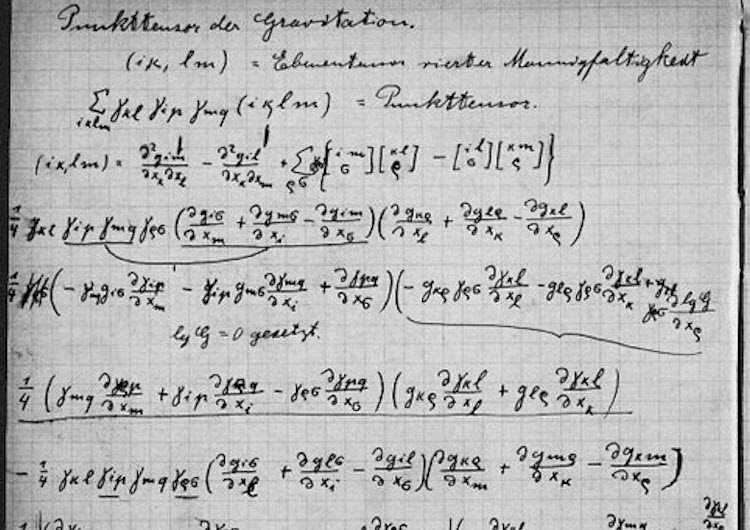

Choose from these words to fill the blanks below:
extrapolation, bigger, smudges, Hubble, philosophers, farther, relativity, Eddington, Sitter, Lemaitre, gravity, galaxies, Friedman, electromagnetic, balanced, moving, Curtis, egg, expanding, island, Milky, collapse, nebulae, Andromeda, experimental, explicitly, Messier, constant, 3261, Milne
•
the discovery of galaxies
•
before we began studying the universe in a scientific sense, we learned about which are its constituents
•
but first people didn't know what they were
•
they were just smudges in the sky, called " "
•
first cataloged by Charles
•
before this, tried to address the question
•
sometimes called " universes", what today we call galaxies
•
until 1920s, basic question: are these nebulae galaxies like the milky way or are they just some within our own galaxy
•
Shapley- debate
•
inconclusive
•
Shapley had the wrong answer, that the smudges were part of the Milky Way
•
Curtis was advocating that there were many galaxies like the Way
•
articles were not based on solid data
•
1923 Hubble
•
Mt. Wilson observatory
•
found a variable star in
•
comparing the star to stars in our galaxy, he determined that it is much away than anything in our galaxy
•
several 100 kiloparsecs away
•
1 kiloparsec = light years
•
so all of a sudden the picture changed from the milky way being the entire universe to it being a much, much universe
•
if you want to understand the universe at large in physical terms, the only interaction that actually matters is
•
because all other forces are short-range, except force, but there charges are mixed so well so that the net electromagnetic field is zero
•
not so with gravity
•
gravity cannot be cancelled or compensated
•
this came in the form of the theory of
•
1917: Einstein
•
that the universe would on itself because of its gravity seemed like a natural thing
•
proposed the cosmological constant which this force of gravity
•
turned out to be wrong
•
1917: Willem De
•
developed equations for an expanding universe
•
the discovery of the expanding universe was probably one of the most important scientific discoveries of all time
•
Vesto Melvin Slipher
•
Arizona
•
measured radio velocities of galaxies, later used by
•
Knut Lundmark, 1924
•
Carl Wirtz, 1923
•
Edwin Hubble, 1929
•
plotted distances to galaxies against velocities obtained by Slipher
•
"The Hubble Diagram"
•
shows that the first away galaxies were, the faster they were
•
evidence for universe
•
space expands and carries galaxies apart
•
Einstein regretted his cosmological theory
•
failed to predict the expansion of the universe even though this was contained in his equations and is probably the greatest scientific prediction anyone could make
•
modern relativistic cosmological models
•
Alexander
•
1922, Soviet Union, relativity based expanding universe model
•
George
•
1927, Belgium, look back, it all must have started with in a hot, dense state which he called the cosmic
•
not taken too seriously because it was a bit of an
•
1930s relativistic cosmology models
•
Edward
•
the main difference between the Milne model of an expanding universe, and Einstein's model of an expanding universe was that Milne did not assume a priori that the universe has a homogeneous matter distribution
•
Arthur
•
proved that theory of general relativity was right
•
the Eddington limit, the natural limit to the luminosity of stars, or the radiation generated by accretion onto a compact object, is named after him
•
Robertson and Walker
•
developed mathematical basis of expanding universe
People:
 |
######################### (1730-1817) French astronomer notable for publishing an astronomical catalog consisting of nebulae and star clusters
|
 |
######################### (1875-1969) American astronomer who performed the first measurements of radial velocities for galaxies, providing the empirical basis for the expansion of the universe
|
Ideas and Concepts:
Galaxy of the day, via tonight's Origins of the Universe course:
"The Andromeda Galaxy is one of the brightest of any of the Messier objects, making it visible to the naked eye on moonless nights even when viewed from areas with moderate light pollution. Although it appears more than six times as wide as the full Moon when photographed through a larger telescope, only the brighter central region is visible to the naked eye or when viewed using binoculars or a small telescope.
In 1920, the Great Debate between Shapley and Curtis took place, concerning the nature of the Milky Way, spiral nebulae, and the dimensions of the universe. To support his claim that the Great Andromeda Nebula was an external galaxy, Curtis noted the appearance of dark lanes resembling the dust clouds in our own Galaxy, as well as the significant Doppler shift.
Edwin Hubble settled the debate in 1925 when he identified extragalactic Cepheid variable stars (stars that vary between a larger, brighter state and a smaller, denser one) for the first time, which enabled the distance of Great Andromeda Nebula to be determined. His measurement demonstrated conclusively that this feature was not a cluster of stars and gas within our Galaxy, but an entirely separate galaxy located a significant distance from our own.
On January 5, 2015, the following image was released by NASA. Captured with the Hubble Telescope, it is the largest and sharpest image ever taken of the Andromeda galaxy. It is too large to be easily displayed at full resolution and so is best appreciated in all its depth using this zoom tool."
"The Andromeda Galaxy is one of the brightest of any of the Messier objects, making it visible to the naked eye on moonless nights even when viewed from areas with moderate light pollution. Although it appears more than six times as wide as the full Moon when photographed through a larger telescope, only the brighter central region is visible to the naked eye or when viewed using binoculars or a small telescope.
In 1920, the Great Debate between Shapley and Curtis took place, concerning the nature of the Milky Way, spiral nebulae, and the dimensions of the universe. To support his claim that the Great Andromeda Nebula was an external galaxy, Curtis noted the appearance of dark lanes resembling the dust clouds in our own Galaxy, as well as the significant Doppler shift.
Edwin Hubble settled the debate in 1925 when he identified extragalactic Cepheid variable stars (stars that vary between a larger, brighter state and a smaller, denser one) for the first time, which enabled the distance of Great Andromeda Nebula to be determined. His measurement demonstrated conclusively that this feature was not a cluster of stars and gas within our Galaxy, but an entirely separate galaxy located a significant distance from our own.
On January 5, 2015, the following image was released by NASA. Captured with the Hubble Telescope, it is the largest and sharpest image ever taken of the Andromeda galaxy. It is too large to be easily displayed at full resolution and so is best appreciated in all its depth using this zoom tool."
The day the universe got bigger, via tonight's Galaxies and Cosmology class:
"Cepheid variable stars vary between a larger, brighter state and a smaller, denser one in such a way that their luminosity and pulsation make them particularly important as distance indicators for establishing the galactic and extragalactic distance scales.
The discovery by Edward Hubble in 1923 of one particular Cepheid variable star in the Andromeda galaxy altered the course of modern astronomy. He found that the star brightened and faded in a predictable pattern, like a lighthouse beacon, and identified it as V1, a Cepheid variable.
During this time in the early 1900s, most astronomers considered the Milky Way a single island universe of stars, with nothing observable beyond its boundaries. The Andromeda galaxy was cataloged as just one of many faint, fuzzy patches of light astronomers called spiral nebulae.
This special type of star had already been proven to be a reliable distance marker within our galaxy, and so it helped Hubble show that Andromeda was far beyond our galaxy which settled the debate over the status of the spiral nebulae, and made the universe a much bigger place."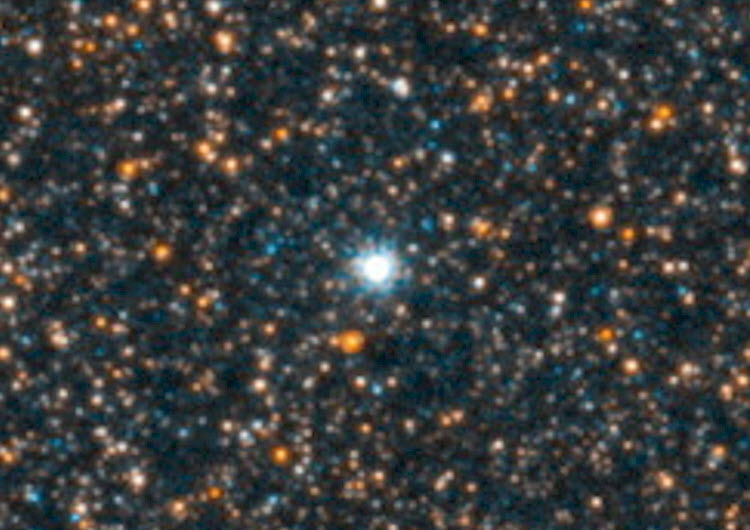
"Cepheid variable stars vary between a larger, brighter state and a smaller, denser one in such a way that their luminosity and pulsation make them particularly important as distance indicators for establishing the galactic and extragalactic distance scales.
The discovery by Edward Hubble in 1923 of one particular Cepheid variable star in the Andromeda galaxy altered the course of modern astronomy. He found that the star brightened and faded in a predictable pattern, like a lighthouse beacon, and identified it as V1, a Cepheid variable.
During this time in the early 1900s, most astronomers considered the Milky Way a single island universe of stars, with nothing observable beyond its boundaries. The Andromeda galaxy was cataloged as just one of many faint, fuzzy patches of light astronomers called spiral nebulae.
This special type of star had already been proven to be a reliable distance marker within our galaxy, and so it helped Hubble show that Andromeda was far beyond our galaxy which settled the debate over the status of the spiral nebulae, and made the universe a much bigger place."
From the monumental oversights department, via this morning's Galaxies and Cosmology class: "Einstein failed to predict the expansion of the universe even though this was explicitly contained in his equations and is probably the greatest scientific prediction anyone could make."
 |  |