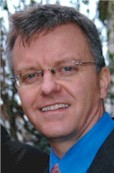
My name is Edward Tanguay.
I have a Bachelors degree in Philosophy, a Masters in Education, and am currently working as a web developer in Berlin, Germany.

I watch over 200 college-level MOOC lectures per year in subjects such as history , psychology, science, religion, art, philosophy, and IT development in English, German, French, Spanish and Italian, and record my notes here.
Hundreds of free, self-paced university courses available:
my recommendations here
Peruse my collection of 275
influential people of the past.
View My Class Notes via:
Receive My Class Notes via E-Mail:

VIEW ARCHIVE


Contact Me via E-Mail:
edward [at] tanguay.info

Learning Activity by Month:


The primary goal of this Learn Tracker project is to build a web site which serves as one place to record the notes of everything that I am learning from MOOC classes, to foreign languages, to useful code examples and technical how-to notes, so that I not only have an overview of what I have learned, but can search and recall these notes at any time.

The secondary goal of this Learn Tracker project is to work together with companies, universities, and MOOC providers to build software that allows employees, students, and learners to record what they are learning in an efficient way so that it serves not only as (1) a record of what they have learned, but also (2) a place for them to review and search what they have learned.

Since January 2013, I have watched and recorded notes on over 300 MOOC lectures from over 30 different courses in both English and French, and have watched and recorded notes and flashcards on over 50 foreign language videos in Italian, French and Spanish. (I am curently still adding notes I took from 2013 and plan to be caught up by the end of January 2014.

Saturday, January 15, 2022
Watched and took notes on MOOC lecture:
A HISTORY OF THE WORLD SINCE 1300, Princeton University
•
in World War I, on the battlefield, the resources of empires hemorrhages in the form of the human toll
•
the peace of 1918/1918 didn't create a durable peace
•
the tension would persist until well into 1945
•
1914-1945, a thirty-years war
•
war was much more common in the world than peace... view all notes
Wednesday, December 29, 2021
Watched and took notes on MOOC lecture:
CHINESE THOUGHT: ANCIENT WISDOM MEETS MODERN SCIENCE, University of British Columbia
•
Neiye - "The Inward Training"
•
part of a larger text, one chapter of the Guanzi, a Daoist text (a mixed text)
•
4th century BCE
•
created by a think-tank type group in the state of Qi [chee], 260 BCE
•
thinkers and intellectuals... view all notes
Tuesday, February 16, 2021
Watched and took notes on MOOC lecture:
CHINESE THOUGHT: ANCIENT WISDOM MEETS MODERN SCIENCE, University of British Columbia
•
after the physiological turn in Confucianism
•
Mencius [MEN-shus], also Mengzi
•
372–289 BC
•
often been described as the "second sage", that is, after only Confucius himself
•
inherited Confucius' ideology and developed it further... view all notes
Wednesday, January 27, 2021
Watched and took notes on MOOC lecture:
INTRODUCTION À LA PHILOSOPHIE DE FRIEDRICH NIETZSCHE, Sorbonne Université
•
la Naissance de la tragédie se compose de 3 parties
•
la première partie
•
Nietzsche développe son hypothèse sur l'origine de la tragédie
•
la seconde partie
•
il expose ses idées sur le déclin du genre tragique... view all notes
Saturday, March 21, 2020
Watched and took notes on MOOC lecture:
SEXING THE CANVAS: ART AND GENDER, The University of Melbourne
•
contemporary indigenous art
•
gathering momentum in Australia from the 1970s onwards
•
indigenous visual culture is the longest continuous art form on the planet
•
50,000 years
•
prior to contact by Europeans, its locus was... view all notes
Sunday, January 26, 2020
Watched and took notes on MOOC lecture:
CHRISTIANISME ET PHILOSOPHIE DANS L'ANTIQUITÉ, Sorbonne University
•
les réponses apportées par les chrétiens
•
les attaques des philosophes ont obligé les chrétiens à se situer sur le même terrain qu'eux
•
à apporter des justifications rationnelles de leur foi
•
l'ensemble de ces réponses chrétiennes, a été paradoxalement, pour cette raison, un facteur de rapprochement important entre christianisme et philosophie
•
l’apologétique... view all notes
Tuesday, December 31, 2019
Watched and took notes on MOOC lecture:
INTRODUCTION À LA PHILOSOPHIE DE FRIEDRICH NIETZSCHE, Sorbonne Université
•
a la mi-avril 1869
•
Nietzsche commence son voyage en direction de Bâle
•
il passe en bateau sur le Rhin
•
il s'arrête à Karlsruhe
•
il assiste à une représentation des Maîtres chanteurs... view all notes
Saturday, November 16, 2019
Watched and took notes on MOOC lecture:
SEXING THE CANVAS: ART AND GENDER, The University of Melbourne
•
Glyn Philpot (1884-1937)
•
made a name for himself in Great Britain in 1910s and 1920s
•
fasionable society portrait painter
•
as art student became fascinated with painting by Italian Renaissance painters
•
Titian (1488-1576)... view all notes
Thursday, October 24, 2019
Watched and took notes on MOOC lecture:
CHINESE THOUGHT: ANCIENT WISDOM MEETS MODERN SCIENCE, University of British Columbia
•
the physiological turn
•
Yang Chu (440–360 BCE) [yahng JEW]
•
the discovery of the body
•
the body becomes a philosophical topic
•
we don't know much about him... view all notes
Monday, September 30, 2019
Watched and took notes on MOOC lecture:
INTRODUCTION À LA PHILOSOPHIE DE FRIEDRICH NIETZSCHE, Sorbonne Université
•
Friedrich Nietzsche est né le 15 octobre 1844 à Röcken une petite ville d'Allemagne, située près de Leipzig
•
l'Allemagne d'alors est un Etat encore en formation
•
le Saint Empire romain germanique, constitué d'une multitude d'Etats, a été dissous en 1806, pendant les guerres napoléoniennes
•
l'Allemagne va être unifiée en 1871, sous l'égide de Bismarck et de la Prusse
•
– ces événements sont importants car ils constituent la toile de fond historique de la philosophie de Nietzsche et l'on retrouve de nombreuses allusions dans son oeuvre, notamment une critique assez féroce du nationalisme allemand... view all notes
show more