EDWARD'S LECTURE NOTES:
More notes at http://tanguay.info/learntracker
C O U R S E
A Brief History of Humankind
Dr. Yuval Noah Harari, The Hebrew University of Jerusalem
 |
C O U R S E L E C T U R E Columbus: Last Man of the Middle Ages, Vespucci: First Man of the Modern Age Notes taken on January 21, 2014 by Edward Tanguay |
•
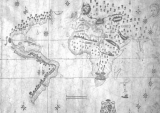
early European maps (e.g. 1459) left no part of the world was uncharted and gave you the impression of familiarity with the world
•
in the 15th century Europeans began to draw maps with many empty spaces, indicating that they were ignorant of large parts of the world
•
1492 Christopher Columbus' voyage was based his "complete" world maps from the Middle Ages
•
when the Pinta reached the first island in the Bahamas, Columbus thought he was somewhere in the Indonesian islands or India and so called the people Indians
•
Columbus never realized or admitted that he discovered a completely unknown continent
•
Columbus died a man of the Middle Ages
•
Amerigo Vespucci
•
first demonstrated that Brazil and the West Indies did not represent Asia's eastern outskirts
•
Italian sailor started to sail in 1500
•
1504: texts argued something revolutionary
•
new lands were of a new continent unknown to philosophers, kings, and the Bible
•
Martin Waldseemüller (1470-1520)
•
German cartographer
•
called the new continent "America" based on Amerigo Vespucci
•
the discovery of America was what really began the scientific revolution because it taught Europeans to favor present observations over past traditions
•
it obliged the Europeans to start searching for new knowledge quickly
•
if Spain and Portugal wanted to control the new territories, they would have to gather enormous amounts of new data
•
even their maps with their blank spaces admitted that they didn't know what was out there
•
this was an admittance that there are important things that we don't know
•
the European explore-and-conquer expeditions are so familiar to us, we tend to overlook how unique they were
•
nothing like it had ever happened before in history
•
long distance campaigns of conquest are not a natural undertaking even for empires
•
most empires were so busy with local conflicts with their neighbors, they never occupied themselves with long-distance discovery
•
at the most, empires would conquer familiar lands around them
•
Rome conquered wider and wider areas to defend their outlying areas, but Romans wouldn't have sailed directly to Britain, explore it and conquer it
•
even Alexander the Great's campaigns had the goal to take over a known and existing empire, the Persians
•
closest parallel were the Chinese in the 15th century, their exploration of the Indian Ocean including East Africa
•
Zheng He had 300 ships and 30,000 sailors compared to Columbus' 3 ships
•
Zheng He explored the ocean, but he did not try to conquer or colonize the countries he visited
•
after Zheng He, not explorer of his ambition never set sail again from a Chinese port
•
prove that Europe did not enjoy any technological advantage at the time, but what they did have was sustained and unparalleled ambition
•
the Romans never had any interest in conquering Scandinavia or India
•
the Persians never attempted to conquer Madagascar or Spain
•
the Chinese learned fairly quickly about European's new discoveries, but they continued to believe that the world revolved around Asia, and so they didn't compete
•
even countries as small as Scotland tried to send out ships to conquer new lands in the Americas, but not one Chinese, Indian, Ottoman, or Arab ship was sent to conquer new lands in America, they simply had no interest
•
the first time that a non-European power sent an expedition to the American continent was in World War II when Japan sent an expedition to Alaska that managed to conquer two small islands, capturing 10 U.S. soldiers
•
so for 300 years after Columbus, Europeans could fight among themselves for the new lands in the newly discovered continents
•
it was the wealth that the Europeans gathered in the New World that enabled them to eventually compete against Asia as an equal, and when the Asian countries realized this, it was to late.
•
the first world map in China that showed America was published in 1602, and even that map was published by a European missionary
•
the first important science was geography, as it gave Europeans accurate knowledge of new lands and oceans
•
other areas of science followed, and in this way, empires opened the way for science, and science opened the way for empires