EDWARD'S LECTURE NOTES:
More notes at http://tanguay.info/learntracker
C O U R S E
A History of the World since 1300
Jeremy Adelman, Princeton University
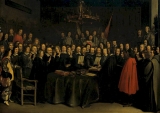 |
C O U R S E L E C T U R E The Treaty of Westphalia as the Hinge of Modern History Notes taken on February 9, 2014 by Edward Tanguay |
•
16th century complicated interconnections between European and Indian powers
•
interconnections gave way to interdependence
•
from changing commodities with each other, they also became aware of each other
•
began exporting slaves from Africa, deployed in the new colonies
•
slaves and colonies were used to create new levels of wealth which was used to change the relations with the rest of the world
•
a paradox at the heart of global history
•
in India, we witnessed the ways which the transformations began the slow secular erosion of central authority in the Mughal Empire
•
Mughal Empire had built up a compound machine that tied local chieftains and kingdoms to central Mughal authority
•
this began to erode over the 17th century
•
new decentralized coalitions emerged between European power brokers and local power brokers at the expense of centralized Mughal authority
•
gave rise to a steady state of warfare which eventually engulfed Bengal, then the richest province of the Mughal Empire
•
1739: defeated in the Battle of Karnal by the forces of Nader Shah
•
Nader Shah saw himself as a latter-day Genghis Khan
•
sacked Dehli and carried away the emperors throne
•
the paradox was the way the new money and new concentrations of wealth shift the balances of power
•
favored new kinds of regimes in Europe
•
the struggle for power motivated the drive for new sources of wealth, a paradox which fueled the instability of the 17th century
•
brought the Spanish and the Portuguese into a struggle of religious orthodoxy
•
Europe's religious divisions
•
Protestants vs. Catholics
•
Reformation and Counter Reformation
•
1618-1648: Thirty Years War
•
spread of political violence
•
reached its high water marker in the 1640s
•
Treaty of Westphalia
•
defined the political boundaries
•
buried the hatchet
•
then turned their sites to colonies in the new world
•
peace on the continent translated into war abroad
•
tensions resolved at home and began again abroad
•
led to mini world wars starting in the 1750s and, one might argue, do not really end until the end of the Cold War in 19989
•
in this way the treaty of Westphalia is a hinge in global history