EDWARD'S LECTURE NOTES:
More notes at http://tanguay.info/learntracker
C O U R S E
Phenomenology and the Conscious Mind
Dan Lloyd, Trinity College
 |
C O U R S E L E C T U R E Principles of Phenomenology Notes taken on February 11, 2016 by Edward Tanguay |
•
some people think that the study of consciousness must be some kind of intellectual selfie
•
based on some kind of inner self-examination or introspection
•
but actually the starting point of phenomenology is to turn away from the selfie an towards the world
•
its in the structure of the world that we actually discover the structure of consciousness
•
phenomenology is not in your head
•
it's in the world we inhabit, the lived world
•
our first focus will be vision
•
the experience of seeing
•
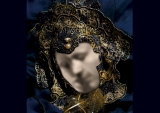
the mask picture
•
does it include a pearl?
•
does it include a face?
•
are there two people in the picture?
•
observe carefully, see more
•
the is the first rule of phenomenology
•
phenomenology is a form of mindfulness
•
paying more attention to yourself and your world
•
the mask picture
•
looks like a face
•
yet it is actually a picture of two people kissing
•
it's possible to see both interpretations
•
ambiguous images are well-known
•
the duck-rabbit
•
the Necker cube
•
textbook perception
•
you may have thought as perception as the passive reception of a stable scene of unambiguous objects
•
the eye, like a camera, simply responds to the light reflecting from the objects before it and transmits its responses to the brain
•
the perceiving mind works like a video camera, entirely responsive to the stable, objective world, it's perception as reception, an essentially passive process
•
perception as reception leads to some expectations about the experience of seeing, suggesting that what we see is whatever emits or reflects light in the field of vision
•
we see just what is there to be seen
•
accordingly psychologists often describe the mind's cube reversals while looking at a Necker cube as spontaneous
•
the visual system fatigues after the viewing of one interpretation and spontaneously flips to the other
•
the first principle in phenomenology is the recognition that you can make the image reverse at will
•
in this case we play an active role in forming our own perceptions
•
consciousness is a form of action
•
perception is not simply something that happens to us
•
instead, it is something we do
•
we can talk about acts of perception on a par with walking, speaking, and so forth
•
seeing, and all the other senses, are part of an intentional act of constructing our worlds
•
the second recognition in phenomenology is
•
the duck-rabbit
•
the bunniness or the duckihood of the picture depends on how we choose to see it
•
constitution
•
active construction of perceived reality
•
"through our act of perception, we constitute the objects we perceive, our perceptual activity make the objects of perception what they are for us
•
phenomenology
•
the deliberate exploration of acts of perception and the constitution of the perceived world