EDWARD'S LECTURE NOTES:
More notes at http://tanguay.info/learntracker
C O U R S E
The Modern World: Global History since 1760
Prof. Philip Zelikow, University of Virginia
 |
C O U R S E L E C T U R E 1970s Democratic Socialism Becomes a Non-Choice Notes taken on August 26, 2014 by Edward Tanguay |
•
direction of global economy in 1970s
•
the social democracy model failing
•
the model of big companies, big government, big unions doesn't seem to be working culturally or economically
•
capitalism being questioned
•
1975, Time Magazine cover, "Can Capitalism Survive?"
•
1980, Time Magazine cover, "Is Capitalism Working?"
•
the rise of communist parties in Western Europe
•
Enrico Berlinguer
•
early 1970s: traditional communism didn't look unstable yet
•
it looked as though the Soviet Union and their allies were at least not failing
•
the higher price of oil tended to favor the Soviet Union in the short run
•
they produce a large amount of oil
•
gives them hard currency
•
enables them to bolster communist states
•
economically, socially, it looks like state socialism might be working
•
big alternatives that are emerging
•
increased focus on civil rights
•
there needs to be something more involved in world politics than just a balance of power
•
1977-1981 Jimmy Carter was a symbol of some of this
•
the Cold War "swing areas" of the 70s: key areas which instigated change
•
1. Western and Central Europe
•
2. China
•
choices made in these areas are going to change the flow of the Cold War
•
just as in other areas of history, these were key areas
•
two U-turns
•
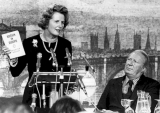
1972: Edward Heath turns to the left
•
was going to fix inflation and fight unions
•
1972 gave into the unions
•
increased spending
•
increased inflation
•
bitterly denounced by Thatcher, "this lady is not for turning"
•
1982: Francois Mitterrand turns to the right
•
leader of a democratic socialist party
•
1981: had taken charge of France in partnership with the communists
•
1982: joined a new economic and political consensus emerging in Europe which moved away from Communist influence
•
democratic socialism
•
had been slowly emerging in European governments throughout the 1970s
•
1974-1979: Labour Party in England
•
1981: Mitterrand's PS (Parti socialiste) party came into power and invited the Communist Party into his first government
•
unions such as the one that caused Edward Heath's U-Turn in 1972
•
unions want wages to keep up with inflation
•
the public had to take sides
•
Thatcher and British Conservatives
•
Scargill and the striking miners
•
the British public ended up mostly taking sides with Thatcher in this case
•
surge of Eurocommunism
•
Italy
•
Enrico Berlinguer
•
Spain
•
had been under dictatorial rule of Franco
•
1975: Franco passed away
•
leading faction were democratic socialists
•
rise of single-issue parties
•
environment
•
ethnic nationalism
•
rise of concerns for governability and public order
•
people feel like their societies are breaking down
•
union policies are having too much influence
•
domestic terrorists
•
Italy: the Red Brigades
•
formed 1970
•
violent attempts to destabilize Italy by acts of sabotage, bank robberies, and kidnappings
•
kidnapped and murdered Christian Democrat Prime Minister Aldo Moro
•
Iran: U.S. embassy in Iran overrun by Iranian revolutionaries
•
reaction to these events was: we need stronger public order
•
democratic socialists can't free themselves of taint with association from the USSR
•
by late 1970s, Soviets are getting a pretty bad press
•
invasion of Afghanistan
•
late 1970s: it's hard to look at the Soviet Union and see anything that looks like a model for the future
•
the Soviet Union feels no strong incentive yet to reform their implementation of socialism which makes it difficult for socialist movements in Europe to get wide support from the public
•
the result is that democratic socialism does not become the wave of the future in Europe