EDWARD'S LECTURE NOTES:
More notes at http://tanguay.info/learntracker
C O U R S E
Roman Architecture
Diana Kleiner, Yale University
 |
C O U R S E L E C T U R E The Increasing Greekification of Roman Temple Building Notes taken on January 21, 2014 by Edward Tanguay |
•
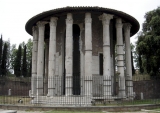
Temple of Vesta in Tivoli
•
beautifully situated
•
built 80 BC
•
a round temple and temples of Vesta were round so tended to be called by scholars "Temple of Vesta"
•
this is as Greek as we have gotten so far
•
Greeks liked round temples
•
round structure
•
low base
•
free-standing columns
•
Temple of Vesta in Tivoli has higher podium
•
staircase on on side, so has a kind of facade orientation, some Etruscan characteristics
•
is of the Corinthian order, last of Greek orders
•
supporting a frieze
•
used concrete for the cella
•
Corinthian capitals
•
spiral volutes
•
much smaller
•
acanthus plant, grow all over Italy
•
while Greeks used Doric and Ionic exclusively, Romans decided that the Corinthian capital is their capital for their columns
•
decorative
•
looks the best from the most vantage points
•
Doris order is severe
•
Ionic order looks good only from certain angles
•
coffering of the ceiling, series of square elements to give an appearance of depth in the ceiling
•
146 BC, Romans had already put up a temple near the Tiber that was made entirely of marble, imported marble
•
Romans were building more and more ornate temples
•
some conservatives of the time were bemoaning that the Romans had moved away from Etruscan temples of mud-brick and becoming too ostentatious
•
"Let us feel that conflagration to have been the will of heaven, and its purpose not to destroy the temple of Almighty Jupiter, but to demand of us one more splendid and magnificent."
•
this meant: more Greek, more Greek looking, more marble, even Sulla stole 15 meter columns from Athens to rebuilt the Temple of Jupiter
•
the goddess Vesta
•
goddess of the hearth, home, and family
•
symbolized by the sacred fire that burned at her hearth and temples
•
Greek equivalent: Hestia