EDWARD'S LECTURE NOTES:
More notes at http://tanguay.info/learntracker
C O U R S E
Roman Architecture
Diana Kleiner, Yale University
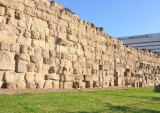 |
C O U R S E L E C T U R E The Servian Wall of Rome Notes taken on January 18, 2014 by Edward Tanguay |
•
very many structures were built after the Temple to Jupiter
•
however, very little of these survived from this period
•
fires destroyed them, as many were made out of wood
•
many buildings became quarries for architects using them as a source of stone
•
any city that has been inhabited for two and a half millenia is obviously going to lose many of its structures over time
•
some of them that survived best are those that were incorporated into other buildings
•
386 BC: Gallic sack of Rome
•
but most structures would have been destroyed in the year 386 BC anyway
•
group of Gallic tribes, the Galls
•
came down from the north
•
destroyed everything in their path
•
destroyed Florence
•
set Rome ablaze
•
one of the only buildings still standing was the Temple of Jupiter
•
after this, Romans learned to wall their cities
•
post 386 BC wall construction
•
Servian Wall
•
started 378 BC
•
most important wall
•
4th century
•
stone circuit
•
around the entire seven hills
•
some parts of the wall are still visible, e.g. at Stationi Termini
•
brought in tufa from Etruscan citiy of Veii, 16 KM NNW of Rome
•
very weathered today
•
system of headers and stretchers
•
header: short side out
•
stretcher: long side out
•
blocks are regular
•
ashlar masonry, opus quadratum
•
Rome had imperialistic ambitions
•
began to build colonies in Italy, close to Rome itself
•
built mini Romes
•
recognized that they also needed to be protected, and so built walls in these cities as well
•
many polygonal masonry
•
Falerii Novi
•
50 km north of Rome
•
241 BC founded as colony
•
walls 200 BC
•
greatest master work
•
one of the earliest arches
•
voussoir blocks: wedged shaped for arch
•
Romans capitalize on using the arch for expressive purposes
•
town planning
•
started with colonizing around Rome
•
Cosa
•
3rd century BC
•
roughly a square
•
forum in the middle
•
a capitolium: temple for Jupiter, Juno, and Minerva
•
Ostia
•
castrum (plural: castra)
•
buildings or plots of land reserved for or constructed for use as a military defensive position
•
Rome, in contrast, grew as a very irregular city
•
flaschards
•
blocks shaped as wedge for stone archway
•
voussoir blocks
•
kind of masonry of Roman Wall
•
ashlar masonry, opus quadratum