EDWARD'S LECTURE NOTES:
More notes at http://tanguay.info/learntracker
C O U R S E
Phenomenology and the Conscious Mind
Dan Lloyd, Trinity College
 |
C O U R S E L E C T U R E Semi-sensations and Positional Consciousness Notes taken on February 12, 2016 by Edward Tanguay |
•
goal of phenomenology
•
to see more, specifically to observe in an active, energetic and creative way, looking for possibilities, including the unlikely
•
this approach to observation replaces the textbook conception of perception
•
the textbook picture of perception reception seems tied to available light
•
perception is not just limited to what the light affords
•
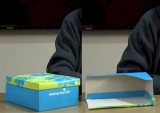
you see the sides of a cube that face you
•
the sides that reflect light onto your retina
•
but we don't see the bundle of light rays
•
we don't see images on the retina
•
we don't see impulses on the brain
•
we see the cube
•
what the intermediaries fail to give us is the thing which is before us, but it is that thing, not the intermediaries
•
to posit, v.
•
the constituting awareness of objects as external, as out there outside the mind
•
consciousness posits external objects which means consciousnesses assigns to the object outside of me, I'm here but it's there
•
this is positional consciousness
•
to see the cube as a cube is to see it outside of us in a specific location in a space around us
•
also: objectivate, an awkward synonym
•
when you look at a cube, you see a six-sided solid, some parts we can see and some we can't
•
we have a very distinctive awareness of what those parts are like
•
the hidden sides of the cube are constituted by something like imagination
•
but imagination is more flexible
•
the back sides of the cube are less flexible
•
the sensation of the hidden parts are a semi-sensation
•
between imagination and visual sensations
•
folded into sensation is a lot of extra-sensory perception
•
the semi-sensations of sensory properties unseen and unfelt
•
our perception goes beyond sensation, filling in dimensions of the sensory world with features that turn the flat image into a scene of things with a space that has us in the middle of it
•
we see, or semi-see, objects that are invisible to the eye, but these hidden facets are only one part of our sensory world