EDWARD'S LECTURE NOTES:
More notes at http://tanguay.info/learntracker
C O U R S E
Letters of the Apostle Paul
Laura Nasrallah, Harvard University
 |
C O U R S E L E C T U R E The Priene Inscription Notes taken on February 26, 2014 by Edward Tanguay |
•
the communities to which Paul writes are part of a broader range of Jewish identity
•
Gentiles were interested in Judaism
•
diaspora Jews were interested in being in Christ
•
Polybius offered story of the succession of empires from 264-146 BC
•
Book of Daniel offered story of the succession of empires set in the time of Babylonian captivity
•
Josephus writes not as an objective historian of the Jewish War but as someone in the pay of the Roman imperial household of the Flavians, the ones who had burned the Temple
•
translates Jewish philosophies to a non-Jewish audience
•
Priene [PRIGH-ee-nay] Inscription
•
context
•
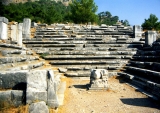
found on rocks in modern day Priene, Turkey
•
found in the hall of the city, or stoa
•
room was probably used for the cult of Roma, the Greek goddess which personified Rome, and the cult of Augustus, both of whom were probably worshiped here
•
so Preine is a an ancient city steeped in Greek culture, but we find evidence of the honoring of Rome, Roma, and Augustus in at least three locations
•
two blocks: one knee high, one waist high, one of blue lime stone, one of white marble
•
as a governmental notice, its content is very dry
•
first part
•
letter from proconsul Paulus Fabius Maximus
•
proposal for a new calendar for the province of Asia
•
the birthday of the divine Caesar (Augustus) brings good fortune to all and suggests that the Asian League reorder their calendar to start on Octavian's birthday
•
second part
•
the league of cities of Asia respond positively
•
agreed that the new year would begin on September 23, the birthday of Augustus
•
the act described on the Priene Inscription is simultaneously political and religious
•
it takes part in a long tradition of honoring rules and emperors
•
these inscriptions were placed in centers of government and power