EDWARD'S LECTURE NOTES:
More notes at http://tanguay.info/learntracker
C O U R S E
Roman Architecture
Diana Kleiner, Yale University
 |
C O U R S E L E C T U R E Porticus Aemilia Notes taken on January 24, 2014 by Edward Tanguay |
•
in the age of Augustus (63BC-14AD), Rome began to colonize cities around it
•
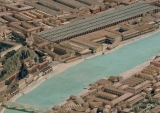
Porticus Aemilia
•
large warehouse on banks of Tiber
•
193 BC, restored in 174 BC
•
only small fragment survives
•
Livy (59BC-17AD) ##livy
•
Roman historian
•
wrote "Books from the Foundation of the City"
•
from traditional foundation of Rome in 753 BC through the reign of Augustus in Livy's own time
•
mentions Porticus Aemilia
•
Forma Urbis
•
marble map of Rome
•
early 3rd century AD
•
under Septimius Severus
•
purported to represent all buildings
•
only have fragments, but some represent the Porticus Aemilia
•
long structure
•
storage
•
Rome began trading more extensively
•
needed to store goods going out and in
•
disagreement about how warehouse looked
•
but sure of
•
made of concrete
•
had barrel vault, difficult to make out of stone but easy to make out of concrete
•
Livy says it was tiered in four levels
•
open gates between barrel vaults
•
Market Hall in Ferentino
•
100 BC
•
one giant barrel vault
•
Opus Incertum work
•
nicely cut ashlar blocks and voussoir blocks
•
it looks forward in architecture
•
experimentation in larger warehouse buildings
•
Mercati di Traiano
•
world's oldest shopping mall
•
the arcades in Trajan's Market are now believed by many to be administrative offices for Emperor Trajan
•
Emperor Trajan (53AD-117AD)
•
declared by the Senate as optimus princeps ("the best ruler")
•
presided over the greatest military expansion in Roman history
•
shops and apartments were built in a multi-level structure, and it is still possible to visit several of the levels
•
delicate marble floors
•
remains of a library