EDWARD'S LECTURE NOTES:
More notes at http://tanguay.info/learntracker
C O U R S E
Letters of the Apostle Paul
Laura Nasrallah, Harvard University
 |
C O U R S E L E C T U R E How Ancient People Wrote about Their Place in History: Polybius and Daniel Notes taken on January 31, 2014 by Edward Tanguay |
•
strategies of talking about their place in history
•
often ancient histories gave reasons for the succession of empires
•
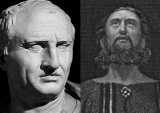
Polybius (200BC-118BC)
•
Greek historian
•
noted for his work: The Histories, which covered 264 BC to 146 BC
•
the rise of the Roman Republic to world power
•
separation of powers in government
•
a time of ethnic ferment
•
talks about a succession of empires
•
Persians
•
Lacadaemonians (Spartans)
•
Macedonians (Philip and Alexander the Great)
•
says nothing compares with Roman rule
•
describes Roman rule as an inevitability
•
was taken to Rome as a hostage of the Roman forces
•
he taught in elite Roman households, including that of Scipio the Younger, who captured Carthage in 146 BCE
•
Scipio the Younger (185–129 BC)
•
commanded at the final siege and destruction of Carthage in 146 BC
•
Polybius went with Scipio to North Africa to see the campaigns there
•
says the study of history is necessary for education in politics
•
saw the Romans subjecting "the whole inhabited world to their sole government" as a thing unique in history
•
teaches how Fortune, in the Roman period both a concept and a goddess, allowed the Roman Empire to succeed
•
Book of Daniel
•
set in Babylonia in sixth century BCE
•
story of Daniel, Jewish exile and prophet
•
thought through events of Antiochus IV Epiphanes, a Seleucid king who desecrated the temple in Jerusalem in 167 BCE.
•
attempted to Hellenize Jews to make them more Greek
•
Daniel's role as a prophet, as a great dream interpreter
•
in the day, dreams were treated as prophecy if it could be interpreted properly
•
explains the dream
•
huge statue before king
•
head was of gold
•
statue breaks
•
stone becomes a great mountain
•
not a great story for kings
•
kingdom of iron, and kingdom of iron and clay
•
King Nebuchadnezzar (634 BC - 562 BC)
•
created Neo-Babylonian Empire
•
created Hanging Gardens of Babylon
•
the story of the succession of empires focuses on the area of Judea, and long-time contested territory
•
long before Paul conceded to go up to Jerusalem to meet James and the other "pillars"
•
God's empire will end the succession of empires
•
both Daniel's history and Polybius' history talk about the reasons certain empires have come to power over others