EDWARD'S LECTURE NOTES:
More notes at http://tanguay.info/learntracker
C O U R S E
Introduction to Psychology
Steve Joordens, University of Toronto
 |
C O U R S E L E C T U R E 1600-1850: Psychology Emerges Notes taken on August 3, 2013 by Edward Tanguay |
•
throughout the centuries, humans have generally perceived themselves as distinct in some way, i.e. spirits in a material world
•
yet for things that were physical, as the scientific method was developed, humans began to see that interactions that those materials show show adherence to physical laws, and through careful observation and systematic experimentation, they could figure out what those laws are
•
led to physics, chemistry, biology, astronomy
•
as humans continued to perceive themselves as spiritual beings, it didn't make sense to study themselves scientifically
•
this began to change first through philosophical thought, and then through autopsies and biological experiments on the body
•
psychology would have never gotten underway if we didn't start to think of ourselves as non-spiritual beings in a physical world, and these thoughts are generally thought to have started with Descartes
•
philosophical thoughts on dualism and materialism
•
René Descartes (1595-1650)
•
French philosopher
•
spent most of his adult life in the Dutch Republic
•
Cartesian coordinate system
•
one of the key figures in the Scientific Revolution
•
believed animals were fully machine-like
•
believed humans had a Cartesian dual nature, partly machine and partly soul
•
believed that the soul could at times control the body like a puppeteer, but can also sit back and let the machine do its own thing and be subject to natural laws
•
John Locke (1632-1704)
•
believed that maybe even the mind was mechanic and physical and thus subject to natural laws that would be studied
•
English philosopher and physician regarded as one of the most influential of Enlightenment thinkers
•
social contract theory
•
his writings influenced Voltaire and Rousseau as well as the American revolutionaries and liberal theory are reflected in the United States Declaration of Independence
•
contrary to pre-existing Cartesian philosophy, he maintained that we are born without innate ideas, and that knowledge is instead determined only by experience derived from sense perception.
•
James Mill (1773-1836)
•
called this line of thought materialism: that we have no souls which can govern our bodies and therefore all human behavior reflects material interactions which are governed by natural laws which can be studied
•
Scottish historian, economist, political theorist, and philosopher
•
founder of classical economics
•
father of influential philosopher of liberalism, John Stuart Mill
•
empiricism
•
the notion of conducting experiments which demonstrate clearly what is and what is not true
•
biology
•
Luigi Galvani (1737-1798)
•
Italian physician, physicist and philosopher
•
studied medicine and had practiced as a doctor
•
in 1771, he discovered that the muscles of dead frogs legs twitched when struck by an electric spark, one of the first forays into the study of bioelectricity, a field that still today studies the electrical patterns and signals of the nervous system.
•
the demonstration was very powerful to those who saw it, indicating to them that there was no soul or spirit left in the frog's legs, but applying an electrical current, you can animate the leg as if it were full of life
•
but that is a frog, what about souls in humans?
•
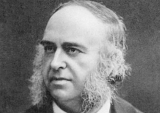
Paul Broca (1824-1880)
•
French physician, surgeon, anatomist, and anthropologist
•
studied the Broca's Area of the brain, responsible for articulated language
•
revealed that the brains of patients suffering from aphasia contained lesions in a particular part of the cortex
•
patients would follow instructions well, but when they tried to speak, their language was jumbled: they could understand language but not produce it
•
Paul Broca asked these patients if, when they died, he could remove and examine their brain, an unusual and crazy-sounding idea at the time, but a number of patients agreed
•
every one of the patients had damage in a particular area of the brain
•
Wernicke's area (subsequently discovered by Carl Wernicke, 1848-1905) turned out to be damaged when people had the opposite problem: could speak but couldn't understand
•
these findings led to general theories of brain localization, that distinct parts of the brain seem to have distinct functions, which is a characteristic also true of machines
•
this localization is true even of such high-level specifically human skills such as language
•
Mary Shelley's Frankenstein was written during a time when scientists and doctors were starting to think of the human body and the human mind as a machine, something that you could even put together with spare parts.