EDWARD'S LECTURE NOTES:
More notes at http://tanguay.info/learntracker
C O U R S E
The Modern World: Global History since 1760
Prof. Philip Zelikow, University of Virginia
 |
C O U R S E L E C T U R E Post WWII: Imagining New Countries Notes taken on May 1, 2014 by Edward Tanguay |
•
the state of the world in 1945
•
countries that have been completely defeated
•
Germany
•
ideologies that have been completely discredited
•
Nazism
•
Fascism
•
millions of people displaced
•
from their homes
•
Jews of Europe migrating to Palestine, a territory under control of a British government mandate
•
dreams that have been deferred for a long time
•
1945 elected a labor government
•
was seen as time to build a new country that had been neglected them through years of depression and war
•
lonely pilgrims
•
they are lonely because they don't have large institutions or large political parties, just a handful of people in several clusters trying to imagine a new country
•
Burma
•
they are trying to think of the new country they are going to build
•
China
•
Nationalist government has been badly bludgeoned by the war with the Japanese
•
Mao Zedong
•
his Chinese communists have been fighting the Japanese
•
India
•
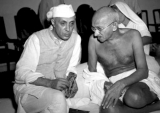
Nehru and Gandhi
•
simple clothes
•
trained in the elite British school system
•
able to function capably in both worlds, East and West
•
Indonesia
•
formerly Dutch East Indies
•
independence movement led by Sukarno
•
problems of nation building
•
what are the borders?
•
Batavia (Jakarta) is capital
•
a very large are of geography
•
very different places and ethnic identities
•
Islam strong on island of Java
•
should it include Borneo?
•
what are their ladders of success?
•
they are living in environments designed by the colonial powers they are trying to overthrow
•
they are climbing a ladder that ends up leading to Paris or London, but actually they are trying to reach a level in a different kind of community that they are trying to create
•
what models are these leaders looking to?
•
democracies
•
is it appealing?
•
is it too hard?
•
communisms
•
seem to be able to take a large mass of poor people and make them pretty strong and independent pretty quickly
•
communism has a strong anti-imperialist rhetoric
•
anti-communists who think democracy is unappealing or too hard
•
many Muslims
•
deeply religious but the doctrine of communism scorns religion
•
but not interested in democracy because of their religion
•
difficult to look toward Turkey, because it had ostentatiously pointed itself toward secularism, limiting the role of Islam
•
a pan-Arab ideology was popular
•
ideologies
•
identity and narrative
•
we are on a journey going from here to here to here
•
vocabularies
•
words and phrases that other people will understand and recognize
•
policy programs
•
recipes to build your country
•
1930s
•
Social Democrats rise
•
1945
•
Fascism is profoundly discredited
•
Italy and Germany both in ruins
•
Japan was flirting with a kind of Holy Fascism ideology, also in ruins
•
Fascism now doesn't seem to extend beyond Franco's Spain
•
Communism strong
•
Social Democracy strong
•
new countries taking these family of ideas to create their own
•
social democracy
•
countercyclical macroeconomics
•
the notion that we can influence supply and demand with governmental action
•
a strong role in government management of the economy
•
John Maynard Keynes
•
social insurance
•
provide people with more personal security in their lives
•
government in partnership with labor
•
big government supports big corporations and big unions
•
Walther Reuther, president of United Auto Workers
•
powerful union offsetting the big three auto manufacturers: Ford, Chrysler, General Motors
•
rebuild global economy
•
distinctive vision between United States with England
•
money 1.0 = old gold standard
•
money 2.0 = gold-dollar standard
•
instead of relying on a finite amount of metal, you rely on a finite amount of metal linked to paper called dollars
•
dollars became a hard currency on which people could set exchange rates
•
Bretton Woods Conference, 1944
•
730 delegates from 44 Allied nations
•
Harry Dexter White
•
American treasury official
•
accused of being sympathetic and being an active agent for the Soviet Union
•
sympathetic to the big government, managed economy approach of the Soviet Union
•
Keynes
•
the Bretton Woods system is about very managed economies with big governments
•
United States supported free trade
•
but carefully regulated the movement of money across borders
•
not like the monetary system we have today
•
World Bank and United Nations Relief and Rehabilitation Administration (UNRRA)
•
for governments to have a bank to help other countries
•
saved hundreds of thousands of lives distributing assistance to people in need