EDWARD'S LECTURE NOTES:
More notes at http://tanguay.info/learntracker
C O U R S E
A History of the World since 1300
Jeremy Adelman, Princeton University
 |
C O U R S E L E C T U R E Napoleon, New Nations, and Total War Notes taken on May 18, 2015 by Edward Tanguay |
•
with kings and queens no longer seen as the custodians of sovereignty
•
who is going to protect these human rights?
•
how would societies protect these rights?
•
it was the nation which was the new place in which sovereignty was being invested
•
the nation would protect the rights of the citizens of the nation
•
everyone in the nation was equally endowed with these rights
•
the presumption was a basic homogeneity
•
we are all members of the nation and basically similar
•
with some important exceptions
•
people of color
•
seen more as wards, i.e. people under guardianship
•
how did the concept of rights and their location, i.e. in each member of the nation, affect total war?
•
in older regimes, armies were dominated by the aristocracies
•
soldiers would be forced or pressed into service
•
with nations, armies became popular
•
instead of paying people to fight, you had members of the nation who volunteered to fight
•
the notion of a nation in arms was created
•
1813 The German Nation in Arms

•
painter: von Gustav Graef
•
popular resistance to the invasion
•
volunteers going off to fight in the defense of the Prussian nation against the French
•
in the painting, you see a Jewish man going off to fight
•
mother uneasy about her son going off to war
•
citizens were obligated to join the army by virtue of being citizens
•
old regimes had relied on paid mercenaries or forced soldiers to do battle
•
did not have the ability to draw upon the bodies and lives of its people to fight their wars, but the new regimes did
•
a consequence of that would be to raise the stakes
•
the escalation of total war draws a tighter line between insider and outsider
•
it has taken a long time to accept the general idea of pluralism within the concept of citizenship
•
each war is seen as a process of creating a nation full of citizens
•
riding it from threats from without and exceptions from within
•
it's ironic that this age that abolishes torture and slavery, yet increases the scale and scope of warfare
•
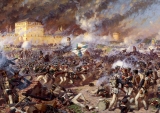
this concept of total war reached its acme
•
marched into Russia with 600,000 soldiers
•
returned with 80,000
•
in Spain he sent 500,000 troops
•
only a fraction returned
•
nation in arms fighting other nations in arms
•
the last time the world had seen armies of this scale was 1000 years earlier in China
•
we won't see international war on this scale for another century
•
as the Napoleonic wars swept across the world
•
this compelled all who were involved from the Ottomans and later the Mexicans to invoke the defense of their political community in the name of their nation against the other invading nation
•
the carnage became a redemptive struggle for national defense
•
the paradox at the heart of this dynamic
•
the rise of new rights coincides with increasing repressive power obtained through the fighting machines controlled by the new governments of these new nations
•
a combination of liberty and lethality