EDWARD'S LECTURE NOTES:
More notes at http://tanguay.info/learntracker
C O U R S E
A Brief History of Humankind
Dr. Yuval Noah Harari, The Hebrew University of Jerusalem
 |
C O U R S E L E C T U R E Spiritual Beliefs of Early Humans Notes taken on September 7, 2013 by Edward Tanguay |
•
mental and spiritual lives of pre-agricultural-revolution humans
•
it's a lot harder to know what ancient people believed than what they ate, especially with no records of writing
•
animist beliefs
•
it is generally believed that ancient peoples had animist beliefs
•
Latin "anima" = soul or spirit
•
world is full of animated beings which can communicate with each everything directly
•
all rocks and trees have feelings, desires and needs, might be angry about something that people did
•
people might go to the rock and talk to it, ask for help
•
animists that humans could communicate with immaterial entities, which you can communicate
•
animists believe that you can communicate directory in speech, song, and ceremony with wolves, clouds and rivers
•
hunters may address deers before killing in order to pay homage and not make the deer god angry
•
shaman contacts spirit who caused the sickness and tries to pacify it or tries to scare it away
•
what separated animism with later religions is that in animism, the entities which you communicate with are local beings such as a particular trees or rocks or spirits in your own valley, but not great gods who lived above the clouds and were responsible for everything
•
animists believed that there is no barrier for communication between humans and rocks, trees and animals, neither is there strict hierarchy in the world, humans are not above or below other spirits, just existing with them, certainly behind affected both negatively and positively by them but there is rarely an ordered hierarchy
•
the world of animists does not revolve around humans or any other particular being
•
it's not a specific religion but a generic name of many beliefs which have a common core approach to the world: no hierarchy and ability to communicate with spiritual entities
•
may have been just as varied as theist religions today
•
compare animism with theism
•
most cultures since the agricultural revolution 12,000 years ago have been theistic religions
•
theism approaches the world with the belief that there is a hierarchy in which gods are at the top and humans and other entities in the world are below them
•
theistic religions vary widely: Greek Pagan religions, Hindu, Islam, Judaism, Protestants, Catholics, Aztec priests, Muslim Sufi mystics, viking warriors, Roman legionnaires, Egyptian peasants. They all generally believe in theistic gods as opposed to animist spirits.
•
we don't have engouh evidence to reconstruct detailed world views of people who lived 30,000 and 40,000 years ago
•
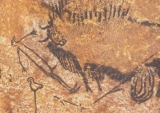
painting: Lascaux cave painting of bull, man and bird, made by people who lived there 15,000 to 20,000 years ago
•
what does it mean?
•
some say that it is a man with the head of a bird with erect penis being killed by a bison, that the bird symbolized the soul being released by body
•
this could be yet there is little other evidence that this is the case, e.g. that the bird symbolizes the soul, we lack other writings, drawings and artifacts which indicate this
•
statue: Venus of Willendorf
•
20,000 years ago
•
found in Austria
•
similar statues that looked like this were found made of many materials all over Europe
•
scholars say that these statues are of a woman goddess, that they worshiped women and were led by women
•
this is a theory with little evidence
•
other scholars say that these statues are proof of a chauvinistic societies and represent an ancient attempt
•
other scholars say that these statues are ancient type of pornography
•
we don't have much other evidence so we are left with these theory
•
art: Cueva de las Manos
•
13,000 to 9,000 years ago
•
hand imprints on the walls of the cave
•
it looks as if the hands are moving toward us from within the wall
•
we know these hand prints were made by different people, i.e. we can tell which hands were from men, women, old, and young
•
there are many theories but we have no hard evidence of why they made these paintings