EDWARD'S LECTURE NOTES:
More notes at http://tanguay.info/learntracker
C O U R S E
Greek and Roman Mythology
Dr. Peter Struck, University of Pennsylvania
 |
C O U R S E L E C T U R E Aeneas, Laocoon, and the Trojan Horse Notes taken on February 19, 2014 by Edward Tanguay |
•
in book 2, Aeneas begins to narrate for his Carthaginian hosts, his own past
•
Trojan War has ended
•
he experienced the fall of his beloved city
•
in a customary twist, modifies and extends Homer's story, tells of Sinon
•
Sinon was a Greek warrior during the Trojan War
•
near end of war, Aeneas is leaving the city, sees this Sinon who says he had been abandoned
•
standing next to him is a giant wooden horse
•
said they built the horse because Athena was angry with them for stealing the Palladium
•
said that they built it so big so it could not be brought into Troy since if it was, Troy would never be able to be conquered
•
Laocoon [lay-AHK-oh-wahn]
•
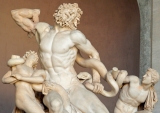
a Trojan who warns that this is a lie, but serpents come up out of the sea and bite and kill him
•
Trojans see this and now redouble their urgency of bringing this horse into the city
•
Odysseus lies quite a bit in the Odysseus and Homer admires him for doing it, Athena egging him on to lie, humans like it when he does, everyone is entertained
•
Virgil plays on this and has the Greeks, here Sinon, lie again
•
so this is the definitive account of what happened after the Trojan war
•
Greeks come out of the horse, annihilate the city
•
Virgil describes in great detail
•
with great concern of what is happening to his city
•
Aeneas is hero figure, but ironically the first thing that he has to do is "abandon his ship", i.e. leave Troy
•
so Virgil has to start a story of abandonment of his home city
•
but plenty of good reasons:
•
humans, gods and ghosts come and tell him to leave
•
even his wife begs for him to leave
•
e.g. the way Venus tells Aeneas to go is very Virgilian
•
*** Venus peels back what is happening so he can see the gods dismantling the walls of Troy, deeply sinister
•
*** for Homer there is an anger and rage, but for Virgil there is a kind of existential menace operating behind the scenes
•
Virgil's world has depths of sinister forces operating compared to Homer's more two dimensional world
•
we thus see Tory engulfed in flames not only literally but in this broad, existential sense
•
Aeneas is carrying his father out of the city, a symbol of his past and tradition
•
he's also guiding his son by the hand, his future
•
Virgil's world is characterized by shifting surfaces, whereas Homer is often brightly lit most of the time, we can see the obvious connections between people and events
•
with Virgil it's hard to get at what is basically happening
•
this is also happening to Aeneas, he is not going to be in command of all the things happening around him
•
he is being pulled along to meet this grand destiny but there will be lots of pain, troubles, and suffering along the way