EDWARD'S LECTURE NOTES:
More notes at http://tanguay.info/learntracker
C O U R S E
A Brief History of Humankind
Dr. Yuval Noah Harari, The Hebrew University of Jerusalem
 |
C O U R S E L E C T U R E Science, Capitalism and European Imperialism Notes taken on January 1, 2014 by Edward Tanguay |
•
in the last 500 years, the scientific revolution has almost completely changed the lives of humans
•
science can only flourish in alliance with an ideology which justifies, guides, and finances scientific research and decides what to do with the new powers scientific research brings
•
the two most important forces which have shaped scientific revolution
•
1. European imperialism
•
2. capitalism
•
science and European imperialism
•
one thing we need to realize about the rise of the European empires is how surprising it was
•
before the scientific revolution, Europe and in particular Western Europe was a poor and marginalized area of the world
•
even the Roman empire, although it had its capital in what is not Italy, derived most of its power from Northern Africa and the Middle East
•
the Western European provinces were a kind of Wild West and contributed little to the power and wealth of the empire except minerals and slaves
•
Northern Europe was so desolate and barbarous in the times of the Romans that they didn't even bother to conquer it because they didn't think there was anything there worth conquering
•
no important religion, ideology, technological invention or economic system came from Europe before the modern age
•
only at the end of the 15th century did Europe start to become a center of military, cutlural and technological developments
•
between 1500-1750, it gained momentum and became the master of the external world, i.e. the two American continents and the oceans
•
even in the 18th century, Europeans were still weaker than most Asian and Middle Eastern powers, but these powers showed little interest in the new continents
•
early modern era
•
Ottoman Empire (1299-1923)
•
golden age in modern era
•
1453 conquest of Constantinople by Mehmed II
•
Safavid Dynasty in Persia (1501-1736)
•
marked the beginning of modern Persia
•
marked turning point in Muslim history
•
Mughal Empire (1526-1857)
•
India and Pakistan areas
•
Ming Dynasty (1368-1644)
•
one of the greatest eras of orderly government and social stability in human history
•
ruled under Han Chinese
•
Qing Dynasty (1644-1912)
•
began in Manchuria
•
even in 1775, Asia accounted for 80% of the world's economy
•
India and China alone was two-thirds of the world economy
•
the global center of power shifted from Asia to Europe only between 1750 and 1850
•
when European powers conquered large parts of Asia
•
by the late 19th century, Europeans generally controlled the world's economy
•
1950: America and Europe accounted for more than half of economic production
•
China was down to 5%
•
Europeans created a new, global culture
•
today most humans are European in their thought, tastes, and the way they see the world, even if they are anti-European and anti-Western in their rhetoric
•
even China is built today on European models of production and finance
•
European technology
•
in the late 19th century, it was often said about European wars in Africa: no matter what happens, we have machine guns and they don't, so don't worry
•
but this wasn't the case before 1850
•
in 1800, the technological gap between Asian, European and African powers was relatively small
•
when Britain began to build railroads, how was it that Germany, France, and the United States were able to follow quickly whereas China lagged behind
•
how is it that Italy, Russia, and Austria were able to quickly close the technological gap and join the industrializing club whereas Persia, Egypt and the Ottoman Empire failed to do it?
•
after all, the technology of the first industrial wave was relatively simple: was it so hard for Chinese or Persians to engineer steam engines, to manufacture machine guns, or to lay railroad track?
•
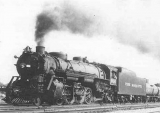
the first railroad in the world opened in Britain in 1830 between Manchester and Liverpool, twenty years later Western European nations were crisscrossed with 40,000 kilometers of railroads, at the same time in Africa and Latin America, there were only 4,000 kilometers of track
•
in 1880, Western countries had over 350,000 kilometers of railroads while all the rest of the world together had only 10% of that: 35,000 kilometers of railroad track, and most of these railroads were built by the British in India
•
the first railroad in China opened only in 1876 which was only 24 kilometers long and was built by Europeans in China and the Chinese government destroyed it the year after it was opened
•
in 1880, the Chinese government did not operate a single railroad line
•
was 50 years too short a time for the Chinese to learn how important railroads were or to learn to build and operate them?
•
in Persia, modern day Iran, the first railroad was built in 1888 and was 10 kilometers long and was constructed by a Belgium company, in 1950, the entire railway network in Iran amounted to only 2,500 kilometers, this in a country that is seven times the size of Britain
•
what the Persians and the Chinese lacked was not technological inventions, even if they couldn't have produced them, they could have easily bought them and learned how to make them themselves
•
what Persia and China lacked were the social political structures and the judicial apparatus that took centuries to form and mature in the West, and which could not be so easily copied and internalized.
•
the Chinese and the Persians could not catch up with the British because they were organized differently
•
up until 1800, Europe did not enjoy any technological advantage over the Asian powers but Europe was gradually building a unique potential whose importance became obvious in the 19th century
•
the apparent equality between Europe, China and the Muslim world in 1750 was a mirage: their power was equal but their potential was very different
•
the two characteristics which gave Europe this decided edge were (1) modern science, and (2) capitalism.
•
when the big inventions of the 19th century and the industrial revolution came along, Europeans were in a much better position to harness them and use them.
•
modern science and capitalism are also the most important legacies which Europe left behind them in the post European world of the 21st century
•
Europeans no longer rule the world today, but science and capital are still the keys for economic and political success in the world