EDWARD'S LECTURE NOTES:
More notes at http://tanguay.info/learntracker
C O U R S E
Jesus in Scripture and Tradition
Gary Anderson, University of Notre Dame
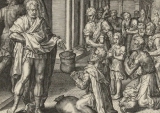 |
C O U R S E L E C T U R E Judah Pleads to Joseph for Benjamin Notes taken on March 23, 2016 by Edward Tanguay |
•
through the stories we get of Joseph, we see his character transformed
•
Genesis 37: Joseph's dreams
•
arrogant individual
•
understood the role he was playing in his family as all about him and used it to the disadvantage of his brothers
•
created tension within his family
•
Genesis 50: Joseph Reassures His Brothers
•
understands that he has been elevated to the office he holds
•
should not wield power over his brothers but provide for them
•
learns that he was elected to serve, not dominate
•
transformation of the brothers
•
Genesis 37
•
they were angry
•
sought petty vengeance
•
threatened to kill Joseph
•
in the end, sent him off to Egypt as a slave
•
Judah
•
son of Leah, Jacob's wife
•
forefather of David, Solomon, kinds of Judah, and Jesus
•
stands in place of the other brothers
•
it's important to read the story of Joseph with the map of Israel in front of us
•
we have twelve figures in the story which map directly onto the map as the twelve tribes of Israel
•
the two most important tribes on the map were the Joseph tribes, Ephraim and Manasseh, and the Judah tribe
•
so it's certainly not a surprise that the two most important characters are Joseph and Judah
•
in the Joseph story there is considerable attention to his person
•
Genesis 38
•
Judah's tortured relationship with daughter-in-law Thamar
•
Genesis 44 end: Judah's speech he gave to defend Benjamin
•
one of the most moving speeches in the Bible
•
Joseph is second in command in Egypt and is feeding his brothers during the years of famine
•
Jewish medieval commentators asked: why would Joseph not use the mechanisms of the state to send a message to his family that he were still alive
•
it would have been a loving act
•
their answer was: Joseph was worried that if he sent word to his family, then the father would learn what the brothers had done to him
•
irreparable damage would have been done to the family
•
no repentance would be father
•
the only way I can make myself known to my family, is to wait until my brothers have repented
•
Joseph demands that the brothers bring Benjamin with them to get grain
•
hides cup in Benjamin's bag
•
it will look like Benjamin stole the cup
•
solders go after the brothers
•
demand that Benjamin be held in Egypt as a slave
•
why Benjamin
•
he is son of Jacob and Rachel
•
Jacob loves Joseph because he is the son of Rachel, his beloved wife, Jacob loves Rachel more than Leah
•
stands to reason that with Joseph out of the scene, Jacob's affections would rest on him as a replacement for Joseph
•
sends the brothers back to Canaan without Benjamin
•
if they hate Benjamin as much as they hated Joseph, this would seem like a providential opportunity to get rid of him
•
they need to nothing except acquiesce in what seems to be this Egyptian's officials decision to hold Benjamin
•
but the brothers are now horrified by this prospect
•
they realize the intense love that Benjamin has for his father and his father has for Benjamin
•
Judah then gives a speech
•
he is the brother who steps forward to make the case to this Egyptian official (Joseph)
•
try to make the case why Benjamin cannot be left in Egypt
•
why he must be allowed to return home to see his father once more
•
he will put his own life on the line
•
Judah's speech, Genesis 44:18-21
•
Then Judah went up to him and said: "Pardon your servant, my lord, let me speak a word to my lord. Do not be angry with your servant, though you are equal to Pharaoh himself. My lord asked his servants, "Do you have a father or a brother?" And we answered, "We have an aged father, and there is a young son born to him in his old age. His brother is dead, and he is the only one of his mother’s sons left, and his father loves him." Then you said to your servants, "Bring him down to me so I can see him for myself.’ 22 And we said to my lord, ‘The boy cannot leave his father; if he leaves him, his father will die." But you told your servants, "Unless your youngest brother comes down with you, you will not see my face again." When we went back to your servant my father, we told him what my lord had said. Then our father said, "Go back and buy a little more food." But we said, "We cannot go down. Only if our youngest brother is with us will we go. We cannot see the man’s face unless our youngest brother is with us." Your servant my father said to us, "You know that my wife bore me two sons. One of them went away from me, and I said, "He has surely been torn to pieces." And I have not seen him since. If you take this one from me too and harm comes to him, you will bring my gray head down to the grave in misery. So now, if the boy is not with us when I go back to your servant my father, and if my father, whose life is closely bound up with the boy’s life, sees that the boy isn't there, he will die. Your servants will bring the gray head of our father down to the grave in sorrow. Your servant guaranteed the boy's safety to my father. I said, "If I do not bring him back to you, I will bear the blame before you, my father, all my life! Now then, please let your servant remain here as my lord's slave in place of the boy, and let the boy return with his brothers. 34 How can I go back to my father if the boy is not with me? No! Do not let me see the misery that would come on my father."