EDWARD'S LECTURE NOTES:
More notes at http://tanguay.info/learntracker
C O U R S E
The Ancient Greeks
Andrew Szegedy-Maszak, Wesleyan University
 |
C O U R S E L E C T U R E The End of Athenian Tyranny and the Democratic Revolution Notes taken on April 7, 2015 by Edward Tanguay |
•
Peisistratos was a tyrant but a good ruler
•
Aristotle devised a special category for him
•
tyranny is bad but he had to make an exception for Peisistratos
•
as an accomplished ruler
•
Hippias and Hipparchus
•
527 BC: overtook Peisistratos' rule when he died
•
tyranny was passed on to them
•
tandem rule
•
ruled well and peacefully for over a decade
•
supported the arts
•
brought poets and singers to Athens
•
texts of Homer took on their canonical form
•
after ten years, things go bad
•
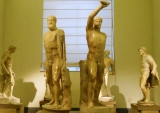
Harmodius and Aristogeiton
•
killed Hipparchus in order to save Athens
•
Thucydides is almost offended by this story
•
says it was simply about a personal insult
•
Hipparchus, the younger brother of the two, made an advance on Harmodius
•
Harmodius was partnered with Aristogeiton
•
Hipparchus then insulted the family
•
forbad Harmodius' sister from carrying the ceremonial offering basket at the Panathenaea festival
•
the young girls who participate were supposed to be virgins, so it was an insult
•
514 BC: Panathenaea festival
•
they kill Hipparchus
•
this becomes known as the tyrannicide
•
not the end of the tyranny
•
Harmodius and Aristogeiton are killed
•
Hippias' rule became much harsher
•
not surprisingly became paranoid against plots to kill him
•
began to travel around with a body guard
•
511 BC Hippias was expelled
•
Hippias took refuge on the Acropolis
•
that's always where one goes when one is exiled
•
Spartan king Kleomenes came up
•
helped Isagoras
•
Kleomenes managed to capture some members of Hippias' family
•
arranged negotiation
•
Hippias left Athens with his family
•
that was the end of the Peisistratid tyranny
•
what happens next has been the subject of enormous controversy
•
Athenian revolution
•
formulated by American scholar Josiah Ober, Stanford University (1953-)
•
the next big man to come up is Cleisthenes
•
member of the Alcmaeonid clan, they're back
•
Kleomenes and Isagoras attempted to take over the state
•
first step was to dissolve the council (boule)
•
the boule resists
•
Kleomenes and Isagoras occupy the Acropolis with Spartan garrison
•
some say Cleisthenes rallied the people at this point, but he was actually in exile
•
another source says that rest of the Athenians unite
•
they beseige the Spartan occupiers
•
on third day of seige
•
Kleomens surrenders
•
Spartans withdraw
•
Cleisthenes is recalled to the city
•
this theory posits a leaderless, popular revolution