EDWARD'S LECTURE NOTES:
More notes at http://tanguay.info/learntracker
C O U R S E
The French Revolution
Peter McPhee, The University of Melbourne
 |
C O U R S E L E C T U R E The Peasantry in Revolt Notes taken on November 5, 2014 by Edward Tanguay |
•
two early events of the Revolution encouraged and raised hopes of rural France that their condition might change
•
1. the drawing up of the Cahiers de doléances
•
2. elections of the Estates-General
•
the first meeting since 1614 of the French Estates-General, a general assembly representing the French estates of the realm: the clergy (First Estate), the nobles (Second Estate), and the common people (Third Estate)
•
state of rural France before Revolution
•
people are living at the end of a harvest crisis
•
price of wheat is increasing
•
wheat and other cereal crops is the staple of rural people
•
1788-1789 food riots
•
adds to the sense of urgency
•
1789 Arthur Young visits Lorraine
•
his diaries are a rich source of information about this time
•
encounters poor woman who says, "it is said, at present, that something was to be done by some great folks for such poor ones"
•
July 1789, the time when the new harvest is just about to be brought in
•
it looks good, unlike the harvest of 1788
•
people are expectant
•
they are also anxious because they have heard about the events in Paris
•
they feel that these events might lead to acts of revenge by the privileged orders
•
news of the storming of the Bastille reaches the country side
•
almost simultaneously, panics fanned out
•
1932, historian Georges Lefevbre wrote about this in "The Great Fear of 1789"
•
the garde champêtre
•
rural police patrolling the countryside
•
saw people who they thought were up to no good, suspected them to be in the pay of the royalty or the nobles, thought they might e.g. cut down wheat to make the harvest worse
•
thought this was the first sign of the nobility of enacting revenge on the commoners for the boldness of their deputies
•
rumors were spreading at "four kilometers per hour" across the countryside
•
rumors become more accentuated and exaggerated with distance
•
e.g. "a couple of people who were cutting down wheat in the village" becomes "whole battalions are destroying the wheat fields across the countryside"
•
rural communities arm themselves however they can
•
they aren't allowed to bear arms, that's a noble privilege
•
they arm themselves with pitchforks and farm implements
•
they get ready for attacks that never come
•
when the attacks don't come, they begin the next stage of the French Revolution, the Grande Peur
•
across most of the country, the chateau belonging to the seigneur are besieged
•
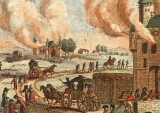
they didn't set chateaus on fire as is often shown in paintings
•
but they besiege the chateaus
•
take nobles or their farm stewards hostage
•
insist that they give them food and wine
•
but they also do more:
•
August 2, 1789: Duke of Montmorency wrote that peasants had carried off and destroyed the documents which stipulated the dues and rents which they owed, and they wrote an acknowledgement of what they did, signed "The Nation"
•
somehow debates of 1788 and 1789 had resonated into rural communities across the country
•
peasants who had been socialized into a position of difference and social respect for their betters
•
had transformed their political identity to the extent that they could say, "We are the nation"