EDWARD'S LECTURE NOTES:
More notes at http://tanguay.info/learntracker
C O U R S E
The Law of the European Union
Stefaan Van den Bogaert, Universiteit Leiden
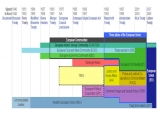 |
C O U R S E L E C T U R E Three Pillars of the EU: ECSC, EEC/EC, EURATOM Notes taken on August 6, 2013 by Edward Tanguay |
•
1951 European Coal and Steel Community (ECSC)
•
failed to come to a defense or political community
•
1957 European Atomic Energy Community (EURATOM)
•
purpose: to create a specialist market for nuclear power in Europe
•
today legally distinct from the European Union
•
1957 European Economic Community (EEC)
•
created by the Treaty of Rome
•
known as Common Market
•
undistored competition
•
approximation of economic policies
•
1965 Merger Treaty
•
EEC gained ECSC and EURATOM
•
1993: renamed the European Community (EC) by the Maastricht Treaty
•
2009: EC was abolished by the Treaty of Lisbon in which the EU would replace and succeed the European Community
•
general periods
•
1950s: "successful 50s"
•
1951 ECSC
•
1957 EEC
•
1957 EURATOM
•
1960-1970s: Eurosclerosis
•
stagnation period, very little progress from a legislative point of view
•
conflicting views of decision making
•
intergovernmentalism vs. supranationalism
•
intergovernmentalism approach: EU states could not be bound by EU acts unless they agreed to these acts, i.e. favored nation veto
•
France, de Gaulle remained absent at all European Community, the "Empty Chair" crisis
•
solved in Luxembourg Agreements
•
an agreement to disagree
•
if a national interest is invoked, member states would search for a consensus
•
disagreement on how to proceed if no consensus found
•
in practice, the French position prevailed
•
supranational approach: countries could be bound by EU acts against their will
•
some progress
•
Court became the motor of integration
•
1963: Van Gend en Loos
•
"principle of direct effect"
•
came from the case of reclassifying a chemical entailing higher customs charges
•
established that provisions of the Treaty Establishing the European Economic Community were capable of creating legal rights which could be enforced by both natural and legal persons before the courts of the Community's member states
•
1964: Costa vs. ENEL
•
established the supremacy of European Union law over the laws of its member states
•
Mr. Costa was an Italian citizen who refused by pay his electric bill because he argued that the nationalisation of the electricity industry violated the Treaty of Rome and the Italian Constitution
•
the Italian judge, the Giudice Conciliatore of Milan referred the case first to the Italian Constitutional Court and then to the European Court of Justice
•
right of individuals to directly invoke European provisions before national courts