EDWARD'S LECTURE NOTES:
More notes at http://tanguay.info/learntracker
C O U R S E
The French Revolution
Peter McPhee, The University of Melbourne
 |
C O U R S E L E C T U R E The Third Estate in Revolt Notes taken on October 5, 2014 by Edward Tanguay |
•
the Third Estate
•
King Louis XVI required the members of the three estates to formulate lists of grievances
•
also lifted constraints on freedom of press
•
so that debates would be freer, more open and more fertile
•
Abbé Sieyès (SEE-yez) takes advantage of this
•
from common birth
•
brilliant young man but experienced frustration because the fact of his common birth meant he was devoid of the aristocratic connection networks
•
by age of 40 a senior and respected cleric but he knows he will never be able to become a bishop or archbishop
•
1788 wrote "What is the Third Estate"
•
the third estate can govern itself, it can be the nation
•
there seems to be two other stages: nobles and clergy, but in fact there is only one, since the senior clergy are all nobles
•
opts to stand as a Third Estate deputy in Paris, dressed in common black costume instead of his clerical fineries
•
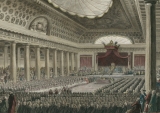
May 5, 1789: Estates General
•
the meeting of the three estates
•
by his speech, it is clear that Louis XVI is keen for sweeping reform
•
needs this reform, especially in terms of taxation, if the state is to find its way out of bankruptcy
•
says the three orders should go to their separate meeting places and start discussing affairs of state
•
Third Estate refuses to meet separately
•
insist that members of all three should meet in a common assembly
•
standoff lasts six weeks
•
June 20, 1789: Third Estate's meeting place has been locked
•
apparently an accident
•
they adjourn to a nearby, indoor tennis court
•
they take an oath not to disperse until they have given France a constitution
•
we will hence forth conduct ourselves as the National Assembly
•
we call on members of the other two orders to join us
•
some of the Parish priests do start joining them
•
Maximilien Robespierre elected to represent his province
•
reports back home how elated he is at the participation and enthusiasm of the Third Estate
•
Louis XVI hesitates but later agrees that members should join the Third Estate as the National Assembly
•
20 kilometers away in Paris
•
there are troop movements
•
people are nervous
•
rumors spread
•
that hostile members of the court are preparing some kind of military action
•
to expel this trumped up National Assembly
•
the National Assembly as it calls itself is saved by a new act of revolution
•
common people of Paris
•
people who are
•
fired up about the possibility of change
•
anxious about the troops in their city
•
hungry since the harvest of 1788 had been poor
•
Louis XVI dismisses finance minister Necker
•
the one non-noble in his cabinet
•
the trigger that sent fear into the people of Paris
•
why would the king expel the one non-noble in his court?
•
Camille Desmoulins
•
had been in school with Robespierre before the Revolution
•
street orator who encouraged crowds in Paris to take part in the revolution to protect the Third Estate
•
unruly crowds in Paris
•
turned their anger against the custom houses
•
customs wall had been built around the city of Paris with 48 customs houses
•
taxes were levied here and were terribly unpopular
•
turned their attention for the search for weapons
•
break into the Invalide, the great hospital
•
the cry goes up to take the fortress of Bastille
•
14th of July, laid siege to the fortress
•
soldiers open fire and scores of Parisians lie dead and wounded
•
governor who called for the shootings surrenders and is put to death in a particularly cruel way, effective hacked to pieces by the mob
•
Hanging of Foulon and Bertier de Sauvigny
•
July 22, 1789
•
Sauvigny, mayor of Paris
•
Foulon was marked to replace Necker
•
they tried to escape but where caught, killed in a cruel way, and their bodies were displayed in the city
•
these acts proved difficult for the Third Estate
•
on the one hand, these acts saved the National Assembly
•
on the other hand there are some acts of horror which have been committed
•
Marquis de Lafayette
•
had been the head of forces who helped Americans
•
elected him
•
powerful and wealthy noble
•
Bailly
•
chosen as the first elected mayor of Paris
•
the National Assembly seemed to be successful
•
but it is an extraordinary confrontation that the people of Paris have unleashed against the regime