EDWARD'S LECTURE NOTES:
More notes at http://tanguay.info/learntracker
C O U R S E
A History of the World since 1300
Jeremy Adelman, Princeton University
 |
C O U R S E L E C T U R E Strains on the Universality of the Enlightenment Notes taken on September 10, 2014 by Edward Tanguay |
•
people in the 18th and early 19th century had to consider what they wanted to do with all this new information, artifacts, discoveries, and inventions
•
new information came in from far-flung corners of the world
•
a challenge of this age was to repackage this information and derive new laws which made sense of it all
•
new kinds of institutions to organize knowledge
•
1838: Royal Agricultural Society of England
•
motto "Practice with Science"
•
promote the scientific development of agriculture
•
created greenhouses for new plants coming back from the discovery voyages
•
physician associations
•
economic societies
•
attach the new methods of science to commerce and derive laws for what makes economies flourish and fail
•
Adam Smith
•
1776, book: "The Inquiry into the Nature and Causes of the Wealth of Nations"
•
four volumes in all
•
he's referring to the wealth of all nations
•
explored the laws of human behavior
•
an epic struggle within the soul of every man trying to channel his passions
•
men's passions had to give way to self-interest
•
the goal was to set up conditions so that the operations of the "invisible hand" could take place
•
this was seen as a new faith, a faith in reason, a break with faiths of earlier ages
•
new governments
•
a sense that we can take the scientific method and apply it to finding better ways to organize humans into political entities
•
Enlightenment thinkers generally believed that humans were perfectible
•
had political ramifications
•
not only men
•
Mary Wollstonecraft argued that women were able to reason as well
•
if women are left out of this movement, how universal can the laws of the Enlightenment be
•
1792 "A Vindication of the Rights of Woman"
•
reminding people that this new universalism was leaving people out
•
that these universal claims were disguises for creating new patterns of social stratification which did not include everybody as equals
•
beyond the boundaries of Europe
•
"man" turned out to be a very varied creature which put strains on the "universal" claims of the Enlightenment
•
people become increasingly associated with skin color
•
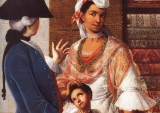
an effort was increasingly made to catalog people, to organize people in the Americas and people from parents with different colored skin and from different continents, inventing a category for every sort of mix of people:
•
the Casta Paintings
•
create new demographic categories
•
Indios (Amerindians)
•
Mestizos (mixed Amerindian and White)
•
Castizos (White with some Mestizo)
•
Cholos (Amerindian with some Mestizo)
•
Pardos (mixed White, African, and Amerindian)
•
Mulatos (mixed African and White)
•
Zambos (mixed Amerindian and African mix)