EDWARD'S LECTURE NOTES:
More notes at http://tanguay.info/learntracker
C O U R S E
A History of the World since 1300
Jeremy Adelman, Princeton University
 |
C O U R S E L E C T U R E 1899-1911 The End of the Qing Dynasty Notes taken on June 1, 2017 by Edward Tanguay |
•
China face threats from inside and out
•
over the course of the 19th century, China was forced to sign humiliating treaty concessions to external powers
•
European
•
Japan
•
also participated in slowly dismantling the sovereignty of the Chinese empire
•
was never fully colonized
•
the cost of colonizing was high
•
foreign powers could get the regime to do some of the dirty work of controlling local populations
•
informal empire
•
treaties built into it to hobble the Chinese state
•
market and non-state forces were used to sap and drain the Chinese empire of its sovereignty and power
•
led to a wave of unrest against the Chinese government for giving in to too many concessions to foreigners
•
against both the external forces as well as the Chinese state
•
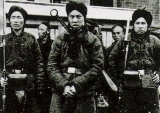
1899-1901 The Boxer Rebellion
•
boxers would go after the symbols of the West
•
telegraph wires
•
foreign embassies
•
churches
•
clocks
•
the reorganization of time came with the advent of capitalism, the assembly line, the routinization of life
•
a foreign emblem in the middle of communities to organize their societies
•
named after the spirit boxers
•
fighter claimed to be immune to swords and spears
•
The Society of Righteous and Harmonious Fists
•
anti-foreign
•
anti-Christian
•
had mass-organizing skills
•
Qing regime responded with some ambivalence
•
saw this as an opportunity for the boxers to do the dirty work of making life hard for foreigners in China
•
but a dangerous game to play
•
if the boxers got too much power, they could claim authority that would be very hard to roll back
•
because the Qing state was so weak, the Boxer Rebellion got out of control
•
despite the calls for the Qing state to intercede, they could not in the end
•
the Boxers soon let their supporters go well beyond what the Qing authorities to control
•
foreign powers decided to take it upon themselves to put down the rebellion that the Qing state didn't want to or could not put down
•
the Qing state they did not have the repressive capacity to contain the Boxer Rebellion
•
foreign troops were dispatched to China
•
half came from Japan
•
eight different countries sent armies to China to wage a war against the insurgents
•
this led to vast repression
•
foreign powers used the occasion to demand yet more concessions from the Qing state
•
including indemnity payments
•
sent a bill to the Qing state to pay for the process of oppression
•
the paradox of reform
•
the impulse to change happens when one does not have the political space or room to do so
•
it's the easiest to reform when you have the least incentive to reform
•
1991 the collapse finally came
•
the overthrow of the Manchu rule that had been born in the 17th century
•
replaced with a Republican form of rule
•
the end of a series of dynasties that had lasted, with interruptions, that had endured over 2000 years
•
created a constitution
•
giving citizens new rights
•
need to legitimate the new regime
•
without the principle loyalties to a royal family
•
the architect of this new reform spirit
•
Sun Yat Sen (1866-1925)
•
what Pyotr Stolypin was for Russian, Sun Yat Sen was for China