EDWARD'S LECTURE NOTES:
More notes at http://tanguay.info/learntracker
C O U R S E
A Beginner's Guide to Irrational Behavior
Prof. Dan Ariely, Duke University
 |
C O U R S E L E C T U R E The Simple Model of Dishonesty Notes taken on January 12, 2014 by Edward Tanguay |
•
in what ways do people lie and cheat yet still think of themselves as good people?
•
often we have a very simple model of dishonesty: what do we stand to gain and what do we stand to lose
•
this is not actually a good model, many other aspects are driving us to be honest and dishonesty
•
we often lie or cheat yet don't think of ourselves as being immoral, this is a commonly shared dilemma that we all have
•
what was the cause of the collapse of Enron?
•
where their three bad apples that planned and executed its creatively planned accounting fraud?
•
or was it more the case that many or most of the people at Enron were just turning a blind eye to what was going on and benefitting them at the same time, a kind of wishful blindness
•
which is dishonesty caused by:
•
a few bad apples
•
then we need to improve our Human Resource policies
•
don't hire bad apples
•
be able to fire bad apples
•
many people cheating just a little bit
•
then you have to think of the fabric of how people's actions influence each other
•
what do we know about cheating and how do we measure it?
•
experiment
•
give each person a matrix math test, find numbers that had to 10, and check when you have found it
•
we'll pay you a dollar a question
•
go to the back of the room, shred the paper
•
then come to the front and I will pay you accordingly
•
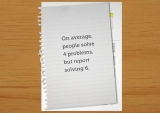
people on average say they solved six
•
shredder actually only shreds the sides of the page
•
on average we find that people solve 4 problems, but report that they solved 6
•
there were not just a few that cheat but many
•
we found very few people who cheat in an egregious way, and find many people who cheat just a little bit
•
the economic rationality
•
Gary Becker
•
looking for place for car
•
about to be late for meeting
•
performs a cost/benefit
•
risk of being caught vs. benefit
•
says all moral issues are like this
•
Beckers's economic formula for cheating
•
1. what do you stand to gain
•
2. what is the chance you'll get caught
•
3. what is the punishment
•
results of experiments on these three points
•
1. changed amount that people got per questions
•
you would expect that the more money at stake, the more cheating there would be, but it was independent
•
2. shredded only the half the page, whole page, and whole page + pay themselves
•
we found that lots of people cheated just by a little bit
•
even if they were told the average number of questions was 4 and 8