EDWARD'S LECTURE NOTES:
More notes at http://tanguay.info/learntracker
C O U R S E
History of Rock, 1970-Present
John Covach, University of Rochester
 |
C O U R S E L E C T U R E The Backlash Against Disco Notes taken on August 14, 2015 by Edward Tanguay |
•
Disco
•
just the word is enough to anger 1970s rock and rollers
•
how can you get so upset about a style of popular music?
•
as if you wanted to stamp it out
•
and wish it never existed in the first place
•
it was a dance craze for sure
•
rejects some important elements of the hippy aesthetic
•
the reaction may have to do with the misunderstanding of black pop
•
most white rock music listeners didn't know much black pop music
•
they may have heard the Ohio Players Funky Worm
•
they'd seen Curtis Mayfield on TV talking about Freddy's Dead or The Pusherman
•
they'd heard Isaac Hayes talking about Shaft or Can you Dig It
•
they knew some Stevie Wonder and listened to the Average White Band
•
early days
•
the idea of disco was not unlike what was happening at American Bandstand
•
when you went to a disco, people played records, and you danced
•
there might not be a guitar or a drum set or a base guitar anywhere to be found
•
this sort of situation is familiar now but back in the 70s, it wasn't that way, when you went to a club, you went to see that band that was playing there, the people performing
•
one reason why disco evolved the way it did
•
in the gay community, people who ran a gay club would want there to be music for dancing, but many bands wouldn't play those gigs
•
so they were in a way forced to use records for dancing
•
developed in urban areas
•
people discovered that certain recordings were better for dancing
•
bands began to create extended versions for dancing
•
disco records began to pop up on the chart almost as novelty records at first
•
1973 Barry White's Love Unlimited Orchestra
•
Love's Theme
•
was called a disco record but didn't get too many people upset yet
•
1975 Van McCoy "The Hustle"
•
that still didn't get anyone too riled up
•
it was just another one of these AM hits, who cares
•
1975 KC and the Sunshine Band
•
That's the Way I Like It
•
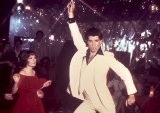
but in 1977 there's a film, "Saturday Night Fever"
•
features a young John Travolta
•
who know John Travolta could dance
•
at the time he had pretty much only been a character on a television show called Welcome Back Kotter
•
this film launched Disco as popular music
•
it became the craze in America
•
1977 Saturday Night Fever, Bee Gees
•
Staying Alive
•
How Deep Is Your Love
•
Night Fever
•
Yvonne Elliman
•
Yvonne Elliman: If I Can't Have You
•
part of the cast of the original Jesus Christ Superstar
•
when the disco craze breaks, every artist was running for their disco craze hit
•
Rod Stewart
•
The Rolling Stones
•
even KISS
•
was a return of the producers
•
Jacques Morali
•
Giorgio Moroder
•
more euro disco based
•
drum machine that could do the beats exactly metronomically
•
artists
•
Donna Summer
•
1976 Love to Love you Baby
•
patently sexual piece
•
you can hear her enjoy the sexual act
•
meant to be heard to draw you in
•
1979 Bad Girls
•
Disco concept album
•
about ladies of the night and the various situations they get into
•
songs
•
Hot Stuff
•
Bad Girls
•
Dim All the Lights
•
The Village People
•
assembled and produced by Jacques Morali
•
didn't speak much English
•
brought together as a kind of gay monkees
•
based on fantasies gay stereotypes drawn from Greenwich Village in New York City
•
weren't taking it entirely serious
•
most people didn't know, they just like the costumes
•
had no sense that the village people had anything to do with gay culture
•
a playful approach to the gay underground that for the most part went over the heads of most white, middle-class listeners
•
it was so not understood, that the song YMCA (1978)
•
essentially about gay guys hooking up at the YMCA
•
and still isn't, if you go to a minor league baseball game, in the 7th inning stretch, they will play YMCA over the stadium speakers
•
and everybody, Mom, Dad, grandma, the kids will all stand up and sing YMCA without the slightest idea that it has anything to do with gay culture
•
they still haven't gotten the joke yet
•
1979 "In the Navy"
•
The United States Navy licensed the song for recruiting purposes
•
on the condition that the Village People could do a video one of the Navy boats
•
when they found out what the village people were doing they pulled the plug on it
•
backlash against disco
•
rock stations start to change format from rock to disco
•
the rock fans felt that their stations were being taken away
•
Steve Dahl
•
shock jock
•
1978 moved from Detroit to Chicago
•
was fired because the station he was at changed formats from rock to disco
•
went to another Chicago station
•
July 1979: Anti-Disco Rally in Chicago
•
put a big box full of disco records and blew it up
•
people started streaming onto the field
•
the second game of the double header had to be cancelled
•
spurred the "disco sucks" movement
•
what upset rock fans so much about disco?
•
promiscuity
•
disco was about finding someone to dance with and then have a one-night stand
•
but when have rock fans been against promiscuity
•
not a good reason
•
homophobia
•
they saw it was from the gay community
•
not many people really realized this
•
not a good reason
•
racism
•
certainly racial
•
a lot of white rockers thought that disco was black music
•
if so, it was not a proud moment in the history of rock and roll
•
disco was a music that was fun rather than about serious issues
•
about the producers and not the artists
•
it wasn't about artistic anything
•
it was an assault on the hippy aesthetic
•
1966 - 1979 Pink Floyd's The Wall
•
it seemed to be gaining ground with radio stations changing format
•
along with disco, punk was arising in England in 1977 and into 1978 in America
•
two musical genres rejecting the hippy aesthetic