EDWARD'S LECTURE NOTES:
More notes at http://tanguay.info/learntracker
C O U R S E
A History of the World since 1300
Jeremy Adelman, Princeton University
 |
C O U R S E L E C T U R E 18th Century Land Grabbing Notes taken on February 21, 2015 by Edward Tanguay |
•
in 1767 a man named George Washington wrote a letter to William Crawford
•
"any person who neglects the present opportunity of hunting out good lands and in some measure marking them for his own, in order to keep others from settling them, will never regain it"
•
capturing the mood of an era we might call The First Great Land Rush
•
people from around the world were turning frontiers into assets
•
could be compared to the spread of the mulberry and rice frontier in China
•
land which had belonged to Indians was turned into sugar plantations
•
there were land rushes before, but from the middle of the 18th century, this land rush became global
•
effect frontier lands all around the world
•
Virgina
•
it's boundaries were unclear as you pushed westward
•
it is now only about 40% of its original size
•
Virginia was an incubus for land hunters
•
this is how George Washington imagined himself
•
very important for global enterprise
•
Fairfax Proprietary company
•
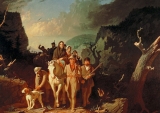
hired George Washington and Daniel Boone (explored Kentucky)
•
George Washington made his fortune by speculating in frontier lands
•
a process that would gather in earnest in the 1750s
•
sparked wars with the Shawnee people's
•
1748 The Ohio Company
•
1750 map of America
•
New France
•
New Spain
•
the English colonies
•
important shift
•
difference between colonialism and corporations
•
from empires of trade to empires of settlement
•
turning lands that belonged to villagers of incumbent populations into land that could be bought and sold
•
British North America was not the only place this was happening
•
South Africa
•
a destination for land hunters
•
1652 Dutch East Indian Company created its own colonies
•
first trading with the Southern African native populations, e.g. the Khoikhoi
•
as Dutch settlers moved into South Africa, they began to press up into the lands of the native peoples
•
began creating their own armies and defense units
•
trekboers
•
protection units ended up not only protecting settlers but actively created property
•
not only defended pastoral lands
•
took the Khoikhoi people and enslaved them
•
in seizing lands and dispossessing peoples
•
raids into the hinterlands were called treks
•
culminating in the creation of an apartheid state after the Second World War
•
Australia
•
New Zealand
•
Northern Mexico
•
Argentina
•
Canada
•
now more than the mixing patterns that we saw in early empire endeavors
•
now we have land-grabbing and
•
a slow change from negotiating and diplomacy inside to outright seizure and dispossession of incumbent property
•
treaties and laws began to favor this process of land-grabbing
•
Europe had turned the wheel from plunder to possession