EDWARD'S LECTURE NOTES:
More notes at http://tanguay.info/learntracker
C O U R S E
History of Rock, 1970-Present
John Covach, University of Rochester
 |
C O U R S E L E C T U R E The Beginning of Rap Notes taken on November 16, 2016 by Edward Tanguay |
•
hip hop culture in the 80s
•
1970s arises in New York's African American and Latino communities
•
remained a regional culture
•
you would have had to go to e.g. the Bronx to see it
•
it was the same thing with punk at CBGB or Max's Kansas City
•
several components to hip hop
•
rap music
•
graffiti
•
got the most attention outside of New York
•
break dancing
•
dress
•
early rap
•
arises from neighborhood parties
•
Reggae music
•
started in Jamaica with the sound system men
•
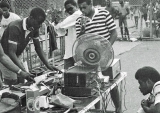
DJ Kool Herc
•
was 12 when he moved from Jamaica to the Bronx
•
he had been to parties where people who are setting up the sound system and would get on the microphone and talk
•
the course of doing this, he developed:
•
the MC
•
brought in Coke La Rock
•
encouraged people to do break dancing
•
called them break boys and break girls
•
prolonged the breaks in records
•
it would break down to a good sounding a beat
•
took a cool section of a song and repeats it
•
gets to turn tables and two copies of the same record
•
keeps going back between the two and starts talking
•
two people influenced by DJ Kool Herc
•
Grandmaster Flash
•
born in Barbados
•
moved to the Bronx
•
took up the practice of two turn tables from DJ Kool Herc
•
developed punch-phrasing
•
most DJs today are working on a computer or laptop
•
but back then it was analog sampling
•
sampling by using actual turn tables and records
•
there was a lot of room for error
•
it took a lot of skill to pull this off
•
one of the first to use scratching
•
moving the need backward
•
although most rap historians would say that the person who created this technique was actually Grand Wizzard Theodore
•
perfected it and made it a signature part of his style
•
showed a virtuosity of being a DJ, a specialty of transforming these received sounds and turn them into more effective sounds in a dance context than they would have otherwise been
•
none of this at the beginning was recorded
•
you had to go to one of these performances to hear it
•
there were not rap records until the late 1970s
•
Afrika Bambaataa
•
a former gang leader
•
his idea was to use hip hop music and rap music to bring youth together to get them out of gang related activity and violence
•
must like midnight basketball, etc.
•
spend that energy in a positive way
•
established a group called Universal Zulu Nation
•
accredited with inventing the term Hip Hop
•
the term had been in the vernacular
•
but Bambaataa put his trade mark on the idea of Hip Hop of his idea of this culture
•
late 1970s began to be recording
•
nobody before this thought that there would be a rap record
•
Sylvia Robinson attended a party in Haarlem
•
heard some kids chanting over a song by Chic "Good Times"
•
she thought it was catchy
•
she had experience in the music business
•
she had experience as Mickey & Sylvia
•
1958 they had the hit "Love Is Strange"
•
1973 "Pillow Talk"
•
created a novelty record
•
called the group the Sugar Hill Gang
•
1979 Rapper's Delight
•
Kurtis Blow
•
1980 The Breaks Part 1
•
Grandmaster Flash and the Furious Five
•
1982 The Message
•
dealt with the negative sides of urban life
•
up until 1982, rap was still a small, regional niche market, but some bands had shown that you could create albums with rap