EDWARD'S LECTURE NOTES:
More notes at http://tanguay.info/learntracker
C O U R S E
The Modern World: Global History since 1760
Prof. Philip Zelikow, University of Virginia
 |
C O U R S E L E C T U R E The Emergence of the Third World Notes taken on July 28, 2014 by Edward Tanguay |
•
the Suez Canal background tension
•
how does the United States reconcile its anti-communist goals with the imperialist goals of the British and French
•
imperial interests are creating colonial rebellions that are playing into the hands of the communists
•
the United States wants to be on the side of aspiring nationalists for the sake of its anti-communist confederation
•
that puts it in conflict with the empires, yet these empires are their allies, that's the tension which came to a head in 1956 with the Suez Canal
•
1954: French lost Indochina
•
French were locked in an intense struggle to retain Algeria, it's North African department of France
•
Egypt under Nasser
•
Nasser overthrows 1952 government, cracked down on Muslim Brotherhood and ousted president
•
1956 nationalizes Suez Canal
•
obliges British to withdraw their forces from Egypt, forces that had been their since 1882, also because of a dispute over the Suez Canal
•
the French don't like Nasserian Egypt either since they think he is supporting Algerian rebels
•
British see Nasser's move on Suez Canal as a way to cut one of their historic imperial life lines
•
British and French secretly collude with the Israelis so that all three countries launch a joint military occupation which will seize the Suez Canal while the Israelis will attack Egypt in Sinai
•
Lester B. Pearson from Canada had proposed a UN peacekeeping force
•
U.S. supported this and put pressure on the British financially
•
unlike 1882, the British and the French had to take a humiliating withdrawal, Israelis forced to withdraw from Sinai
•
significance of the Suez Canal outcome
•
for the West: Americans had reaffirmed the centrality of the anti-communist confederation
•
British and France began looking toward the dismantling of their empires as something that was inevitable
•
the process of decolonization accelerated rapidly
•
as French and British gave up their colonial identity, they started focusing on European identity
•
and some of this European identity excluded the United States, as there was hostility toward the U.S. coming out of the Suez Canal crisis
•
for the East, it gave the Soviet Union more opportunity for taking sides in the Middle East, finding states who wanted Soviet arm supplies
•
to the Soviet Union, Nasser was a hero who stood up to the west and vindicated the cause of nationalism
•
Nasser symbolized the new power of the Third World
•
Third World
•
countries not included in NATO or Communist Bloc, the uncommitted middle
•
from the point of view of the superpowers
•
Third World countries were very important as objects
•
1. dependent patron/client relationships
•
not formal colonies but junior partners on one side or the other
•
2. development models
•
experimental laboratories for American or communist ideas about development
•
enormous infrastructure projects such as dams to generate electricity
•
3. geopolitical locations and strategic pivots
•
to control choke points to important areas of the world
•
4. examples of authenticity and liberation
•
striving against hierarchical oppression
•
idealized image of "the natural person", e.g. Che Guevara, who became a symbol of revolution against oppression
•
5. in all the Third World seemed important
•
from the point of view of Third World countries
•
a non-aligned movement
•
Sukarno
•
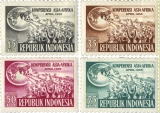
1955 president Sukarno in Indonesia
•
organized the Bandung Conference to unite developing Asian and African countries into a non-aligned movement to counter the competing superpowers at the time
•
interesting that China also attended
•
Jawaharlal Nehru
•
prime minister of India from 1947-1964
•
there was a notion that whichever way the Third World swung would determine future balance of power between the rival blocks
•
leaders felt pressured to be subjects
•
the shape of their countries had been shaped by and inherited from imperial rule
•
kind of government
•
property laws
•
court system
•
armies
•
political vocabulary
•
shaped by the anti-imperialist struggle
•
they are simultaneously products of imperial rule and the hatred of imperial rule
•
decolonization was going on globally in the 1950s and 1960s, little countries getting their independence but with weighted dependence toward the superpowers
•
fragility
•
structure of some of these states are very small
•
e.g. one radio station, one newspaper, a small capital
•
loyal army units you can count on might be a few battalions
•
leaders were conscious of what it would take for someone to suddenly overthrow them and how foreigners might meddle in the affairs of your country
•
affected deals they made to buy goods, promises they made, relations they entered into
•
leaders were both worried by their fragility and tempted by it
•
independence
•
want to feel more independent
•
leaders are trying to manipulate the foreigners to serve their interests
•
modernization
•
catching up
•
lifting their people out of poverty
•
this was a very strong notion for Third World countries
•
there were multiple meanings of modernization
•
banks
•
who controls the modernized banks in my country?
•
who gets access to credit in credit?
•
key industries
•
what is the relationship of my government to key industries: tin, copper, etc.
•
land
•
are you satisfied by who owns land or do you need to redistribute it?
•
trade
•
do you like the trading system that the imperial power left you with?
•
raise or lower tariffs?
•
wages and prices
•
do you let the market set the price for e.g. bread and gasoline?
•
justice
•
guarantees property rights
•
will it be independent?
•
communist model
•
the government controls all of these issues
•
democratic socialism model
•
e.g. Nehru, Mexico
•
state would control quite a lot of these issues
•
land
•
key industries, e.g. oil
•
import-substitution industrialization (ISI)
•
e.g. Brazil
•
increase barriers to trade to develop your own industries
•
low trade and increased local industry
•
reducing local imports of foreign goods
•
export-oriented industrialization (EOI)
•
e.g. Japan, South Korea
•
barriers to imports might still be high
•
keep out foreign imports
•
high trade
•
depress wages
•
depress currency
•
rich countries will think: that stuff they are making is so cheap, we want to buy it
•
problem: you are keeping the wealth of your own people is lower
•
their buying power is being reduced to keep your exports high
•
your companies are happy but your workers are not
•
this define politics in Japan and South Korea in the 1970s
•
liberal stance along the 19th century lines
•
keep government out
•
only regulate capitalist system as much as necessary
•
old-fashioned predatory state
•
the choice of dictators who didn't want to fuss with all of these choices
•
like states that had been around for thousands of years
•
find out what in your country makes money, grab control of it, then squeeze out as much of it as you can for yourself
•
these pressures shaped Third World countries leaders
•
Ghana's Kwame Nkrumah
•
oversaw liberation from Britain in Ghana
•
saw himself as African Lenin
•
Vietnam's Ho Chi-Minh
•
Vietnamese Communist revolutionary, president of North Vietnam 1945-1969
•
Egypt's Nasser
•
Algeria's Ferhat Abbas (1899-1985)
•
involved in revoluationary struggle of Algeria
•
Kenya's Tom Mboya
•
spearheaded the negotiations for Kenya's independence from Britain
•
during this time was when Obama's father came to Hawaii on a scholarship sponsored by the United States
•
China's Mao Tse Tung
•
took land and food away from the rural peasants and redistributed it to the cities
•
this "Great Leap Forward" caused a famine as Stalin's similar attempt in the 1930s
•
probably caused between 20 and 30 million lives
•
Indonesia's Sukarno
•
1946 menacing insurgent figure
•
1958 weary, battled president of a country suffering from civil war
•
India's Nehru
•
split into India and Pakistan
•
Pakistan had divisions of its own
•
a part of Pakistan, East Bengal succeeded from Pakistan and became Bangladesh
•
pressured by China
•
Cuba's Castro
•
led 26th of July movement against Batista in 1959
•
then chose a communist model for his country
•
variety and similarities
•
even though these people indicate a wide variety of personalities, each of them had to deal with the same sorts of questions and issues in their countries
•
important to remember that super powers were using Third World countries for their purposes, just as Third World country leaders were using the superpowers for their purposes