EDWARD'S LECTURE NOTES:
More notes at http://tanguay.info/learntracker
C O U R S E
Greeks at War: Homer at Troy
Robert Garland, Colgate University
 |
C O U R S E L E C T U R E Background of the Trojan War Notes taken on May 9, 2015 by Edward Tanguay |
•
the Greeks have left us extraordinary testimony about war
•
they were as bellicose as any people who ever lived
•
they were also highly literate
•
and some of their greatest writers wrote about war
•
Wilfred Owen (1893-1918)
•
greatest poet of WWI
•
Anti-war poem which ends with the words, "It is fine and honorable to die for your country"
•
a quotation from the Roman poet Horace
•
Owen calls this phrase, "The old lie"
•
Homer isn't an anti-war poet, but like Owen, he emphasizes the horror of war and the terrible sacrifices that young men make
•
war is both universal and particular
•
the Vietnam War was not the same as the Iraq War or as the Korean War or as WWII
•
universal
•
suffering is pretty much of the same intensity
•
horrors are committed
•
there are heroes and cowards
•
innocent people become victims
•
particular
•
the mode of fighting
•
the arms
•
the resources
•
the treatment of prisoners
•
the ideology of driving people to fight
•
what is unique about the Trojan war
•
fought between
•
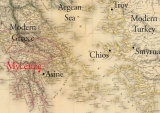
Mycenean Greeks
•
Homer calls them Achaeans or Argives
•
all the leaders of the states that participate are described as kings
•
but a state at that time was primarily a "fortress surrounded by land"
•
loose collection of states under Lordship of Agamemnon
•
has his fortress in the Peloponnese
•
the most powerful of the fortresses
•
"Mycenae rich in gold" says Homer, and indeed much gold has been found there
•
Trojans
•
inhabit Troy
•
also know to Homer as Ilium
•
a war between a multi-state invading force and a single walled city which exercised some control around the surrounding region
•
we don't actually know that it happened
•
not as important as the fact that we have Homer as a witness
•
if it took place then
•
Bronze Age
•
bronze used for all purposes from cooking pots to swords
•
however Homer mentions that both iron and bronze are being used
•
iron replaced bronze because it was much harder
•
3000 BCE: bronze had been invented in Mesopotamia
•
1250 BCE most probably when the Trojan War took place
•
cause of war
•
mythological reason
•
theft of Helen, the wife of Menelaus, brother of Agamemnon by the Trojan prince Paris
•
insult to Greek, to the people of Mycenae
•
Paris had violated the law of hospitality
•
he had been a guest at the palace of Menelaus
•
Menelaus put pressure on his brother Agamemnon to organize an expedition to recover his wife
•
the most beautiful woman in the world
•
whose face launched a thousand ships
•
we have tablets which indicate the Mycenaean raiding parties conducted raiding parties along the Turkish coast
•
one of the women who was abducted was high born, like Helen
•
we know that a small incident lead to a full-scale war
•
e.g. the First World War began as a result of the assassination of the arch duke Francis Ferdinand, heir presumptive of the Austro-Hungarian throne
•
shot by Gavrilo Princip
•
structural reasons
•
Troy lies where the Aegean and the Black Sea meet
•
commercial and strategically important location
•
perhaps due to Greece's insatiable appetite for
•
imported corn from the Black Sea region
•
tin and copper, the raw ingredients to make Bronze
•
which Troy was blocked their access of
•
perhaps Troy was imposing heavy tariff on Greek ships
•
around Troy was a rich, agricultural plain
•
Homer doesn't mention any reason of the war other than to recover Helen
•
sources
•
Iliad
•
deals with the battle front
•
Odyssey
•
deals with absense and home coming