EDWARD'S LECTURE NOTES:
More notes at http://tanguay.info/learntracker
C O U R S E
Roman Architecture
Diana Kleiner, Yale University
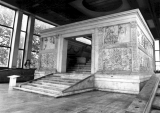 |
C O U R S E L E C T U R E Ara Pacis Augustae Notes taken on February 22, 2014 by Edward Tanguay |
•
Augustus tells us about this structure in his work "Res Gestae" [rez JEST-ee]
•
after successfully restoring law and order to Spain and Gaul, the senate decided to consecrate the Ara Pacis Augustae [AH-rah PAHK-is ah-oo-GOOS-tigh] on the Campus Martius in honor of my return, at which officials, priests, and Vestal Virgins should offer an annual sacrifice"
•
made entirely of solid Luna marble
•
consecrated on July 4, 13 BC
•
completed in 9 BC
•
many scenes on each wall
•
U-shaped alter, Greek, like the Pergamon Alter in Berlin
•
the sacrifice was made inside which is open to the sky
•
two doors but only one staircase
•
double doors: Alter of the Twelve Gods, 5th century BC, market place in Athens
•
like shrine of Janus, it had two doors
•
when the doors were closed, it signaled that peace reigned throughout the empire, Augustus wrote that this happened three times throughout his reign
•
the architecture of the Ara Pacis
•
winged lion griffins, very popular in Augustan times
•
spiraling acanthus plant
•
figurative frieze which represents the vestal virgins, as sacrifices here were in part taking part in honer of them
•
inside wall well preserved
•
with slats, loots like a wooden wall
•
skulls of bulls
•
animal victims would be brought in for slaughter
•
precinct wall is well preserved
•
what is being depicted is a copy of the former, temporary wooden alter
•
we also see this style in paintings of the time
•
a frieze with Austustus, the senators, magistrates, and others in a procession, all supported by ancanthus plants, a kind of fantasy thinking popular in 3rd style Roman painting (20–10 BC)
•
frieze on south side
•
hast portrait of Augustus himself
•
little boy in toga
•
little boy in foreign costume
•
possible "pledges of empire", or hostage guests, children of rulers from other parts of the empire who were brought to Rome to live with the emperor in his palace and be trained in Roman ways with the objective of sending them back to their native lands as rulers
•
Augustus' ways of creating a hegemonic empire
•
also mythological scenes, e.g. Romulus and Remus being suckled by the she-wolf