EDWARD'S LECTURE NOTES:
More notes at http://tanguay.info/learntracker
C O U R S E
Greek and Roman Mythology
Dr. Peter Struck, University of Pennsylvania
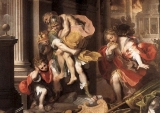 |
C O U R S E L E C T U R E The Aeneid as Roman National Identity Narrative Notes taken on December 25, 2013 by Edward Tanguay |
•
Virgil (70BC-19BC)
•
major works: Eclogues, Georgics, Aeneid
•
Aeneid is the national epic of ancient Rome
•
influenced Divine Comedy
•
lives tumultuous times
•
70BC: Roman Empire is emerging
•
has many different groups which it has brought under its sway
•
Romans were rightfully amazed at their own powers
•
now controlling power in the Mediterranean
•
what does it mean to be this dominant force?
•
1. you have a militaristic side to your background
•
2. fratricidal group: many civil wars and vying for power
•
3. dissolution of the past way of being: Roman Republic is gone, a frightening new world
•
Augustus (63BC-14AD)
•
proclaimed himself first emperor
•
claimed to be carrying forward old traditions but was in fact remaking things
•
Rome needed a new sense of itself
•
Augustus nurtures and supports great poets, Virgil among them
•
felt that the Roman Empire needed a sense of what it is to be Roman
•
proactively built this through the epic form of mythic poetry
•
Augustus and Virgil work parallel building political and mythic traditions
•
there are many histories to Rome
•
Aeneas [ah-NEE-us]
•
son of prince Anchises and goddess Aphrodite (Venus)
•
mentioned in Iliad
•
legendary founder of what would become Ancient Rome
•
his birth
•
Zeus is tired of Aphrodite's affairs so makes her fall in love with a mortal, Anchises [an-KIGH-seez], she's embarrassed
•
although Aeneus has immortal blood, his existence is a type of revenge against Aphrodite, and so he is not that welcomed
•
third century BC, Aeneus is being talked about as the founder of Rome
•
Romulus and Remus
•
8th century BC, they were understood to be founders of Rome
•
has a rich collection of stories around these two characters
•
the problem with this is Rome is founded when Romulus kills Remus, which makes Rome founded on an act of fratricide
•
so this story is not the one he uses, but the figure of Aeneus returns for him
•
other legends
•
first settlement of Lavinium, area to the south of Rome
•
Alba Longa, ancient city of Latium in central Italy, 19 kilometers southeast of Rome
•
this is where Romulus and Remus came from
•
was destroyed by Rome in 7th century BC
•
they apparently sent a colony out to found Rome
•
Latium is also a term that is closely tied to Rome's history
•
what Virgil does is align all of these possibilities into one narrative, with Aeneas as the most important one
•
regardless of its history, Rome was, around 0 BC, the undisputed power in the ancient Mediterranean
•
Virgil's task is to "construct a good past for what this empire is all about"
•
he does this by using Aeneus as the center and looks for a Trojan background for what it means to be Roman
•
what do the Romans get to having Trojan-ness in the background?
•
a sense of antiquity, this great past gets to be the lineage of the city of Rome
•
historically is it accurate to say that such a linkage exists, probably not
•
what we have is a chosen affiliation that Virgil develops and works into a sense of what Romanness is going to be all about
•
a position that is not swallowed up by the Greeks
•
the Romans don't want to claim that they came from the Greeks
•
instead, they choose their background to lead back to Greece's sworn enemies, the Trojans
•
in the Aeneid we learn about Hector and Mias and all the others
•
on the other hand, they're losers, aren't they? The Trojans don't win the Trojan War
•
Virgil of course talks about this "early loss" but in the time of his writing, Rome's position in the world was undisputed, no pesky Greeks around to bother them anymore, the Romans having crushed them in the century before Virgil
•
there is a them of cultural anxiety with respect to Greek greatness
•
"Greece, after it was captured, captured the ferocious victor." which means that after the Romans conquer the Greeks militarily, the Romans then fall for much of Greek culture
•
somewhat like the admiration in America for the history and background in older, European cultures, from England in particular while at the same time feeling a bit of cultural anxiety
•
Roman aristocrats tried to find Trojan ancestral links
•
just as Americans at times try to find linkages to European aristocrats of the past
•
this is the cultural stew that Virgil enters when he tells the definitive story that "yes, indeed, you Romans did come from those Trojans"
•
Aeneus will go from one among many Trojans to a major Trojan, and not only that, but he becomes the founder of the whole national identity of Rome