EDWARD'S LECTURE NOTES:
More notes at http://tanguay.info/learntracker
C O U R S E
A History of the World since 1300
Jeremy Adelman, Princeton University
 |
C O U R S E L E C T U R E 1900-1909: Russian and Turkish Dynasties Notes taken on May 1, 2017 by Edward Tanguay |
•
late 19th century colonial world
•
colonial authorities found themselves as occupiers rather than liberators
•
engaged in unconventional wars
•
not what the military authorities had been trained to practice
•
led to total wars in the colonies with three features
•
1. armies become occupying armies
•
struggling to control territories, as well as people rising up against them
•
2. to justify these practices, the colonial peoples were increasingly dehumanized
•
the increasingly became the other
•
cast in a role as the other
•
necessarily inferior
•
irremediably hopeless
•
deserving of the fate being meted out on them
•
3. the sheer asymmetry of power
•
what General von Trotha wielded in complete superiority over the Hereros was staggering
•
the Hereros had little to use to wage a confrontation
•
paradox: once colonial armies were drawn into these conflicts, it was very hard to extricate themselves
•
dynasties were increasingly in trouble
•
Russia
•
a new cycle of revolutions
•
an echo of the revolutions around the turn of the 19th century, e.g. the American and French revolutions
•
culminated in Russia in 1917
•
pre-WWI, 20th century
•
other rivalries
•
with Japan in the Pacific
•
with the British in central Asia
•
increasingly with German in Europe
•
Russo-Japanese War 1904-05
•
Japan humiliates Russia
•
Czarist regime was faced with
•
rising fiscal troubles
•
growing domestic inequities
•
demands for reforms
•
calls to put constraints on the power of the Czar himself
•
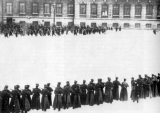
1905 St. Petersburg, Bloody Sunday
•
Czarist troops responded to calls for reform with repression
•
the Czar did agree to some reforms
•
Duma was created
•
party system
•
1906 new constitution
•
reforms issued in the wake of protests
•
Pyotr Stolypin (1862-1911)
•
managed reforms
•
but the reforms was too little, too late
•
Turkey
•
late 19th century had reformers
•
the Young Turks
•
wanted to transform the decrepit, stagnant Ottoman empire into a modern nation-state
•
1908 new constitution
•
provoked a round of tension and reprisals
•
Armenian minorities began to demand new rights
•
Christian Armenians were secessionists, and anti-Turkish
•
Young Turks accused of allowing these upstart minorities to get too many freedoms
•
atrocities
•
1909 civilians accused of treason against the sultan were hanged
•
Armenian massacres were widespread
•
pogroms with 30,000 people dead in some areas
•
led to genocide during WWI
•
this specter of atrocity was picked up in European news
•
evoked opinion against Ottoman Empire as world learns of genocide
•
the first Holocaust
•
a new humanitarian crusade
•
the first human rights movement
•
photo journalist
•
investigators
•
tapped into peoples being able to identify with other peoples